Table of Contents
ToggleSkin Barrier Damage
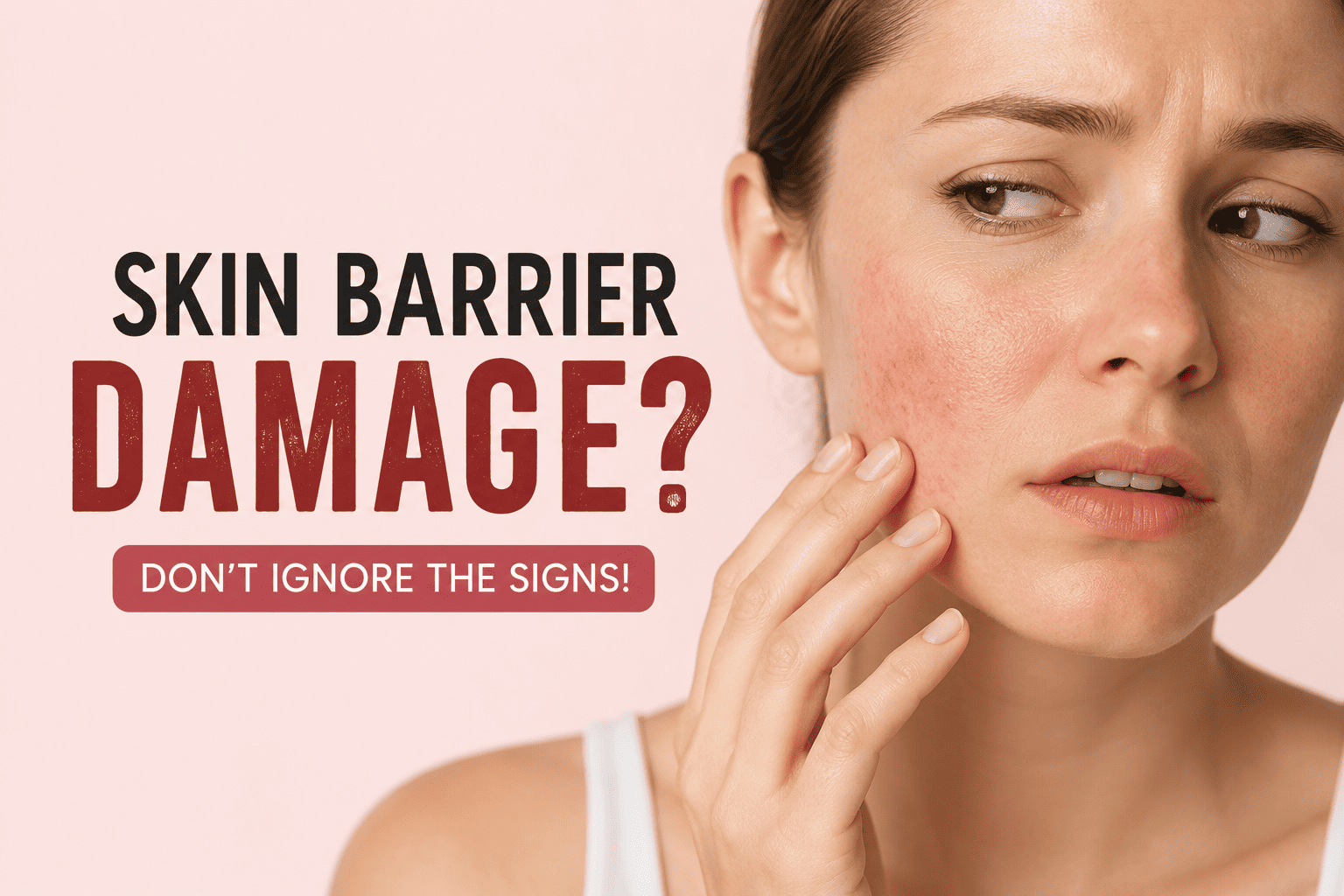
Your skin has a natural protective barrier that helps keep moisture inside while protecting the skin from irritants, allergens and environmental factors. When this barrier becomes damaged, the skin may become dry, sensitive, itchy or uncomfortable.
Skin barrier damage can happen because of over-exfoliation, harsh skincare products, excessive cleansing, weather changes and certain skin conditions. Fortunately, a gentle and consistent skincare routine can help support the skin barrier and improve its appearance.
In this article, we will discuss the signs and causes of skin barrier damage and simple ways to repair and protect it naturally.
What Is the Skin Barrier?
The outermost layer of your skin, called the stratum corneum, acts as an important protective barrier. It contains skin cells and lipids such as ceramides, cholesterol and fatty acids.
A healthy skin barrier helps:
- Reduce water loss from the skin
- Keep the skin hydrated
- Protect against environmental irritants
- Support normal skin function
- Reduce sensitivity to external factors
When the barrier is weakened, the skin may lose moisture more easily and become more reactive.
Signs of a Damaged Skin Barrier
A damaged skin barrier can look and feel different from healthy skin. Common signs include:
1. Dry and Flaky Skin
The skin may feel unusually dry, rough or tight. You may also notice visible flaking, especially around the cheeks, nose or mouth.
2. Increased Skin Sensitivity
Products that previously felt comfortable may suddenly cause burning, stinging or irritation.
3. Redness
A weakened skin barrier can make the skin appear red or inflamed, particularly after cleansing or applying skincare products.
4. Itching or Discomfort
Some people experience itching, tightness or a persistent uncomfortable sensation.
5. Rough Skin Texture
The skin may become rough, uneven or noticeably different from its normal texture.
6. Breakouts
Barrier damage does not directly cause every type of acne, but irritation and the use of multiple harsh products can make existing skin problems more difficult to manage.
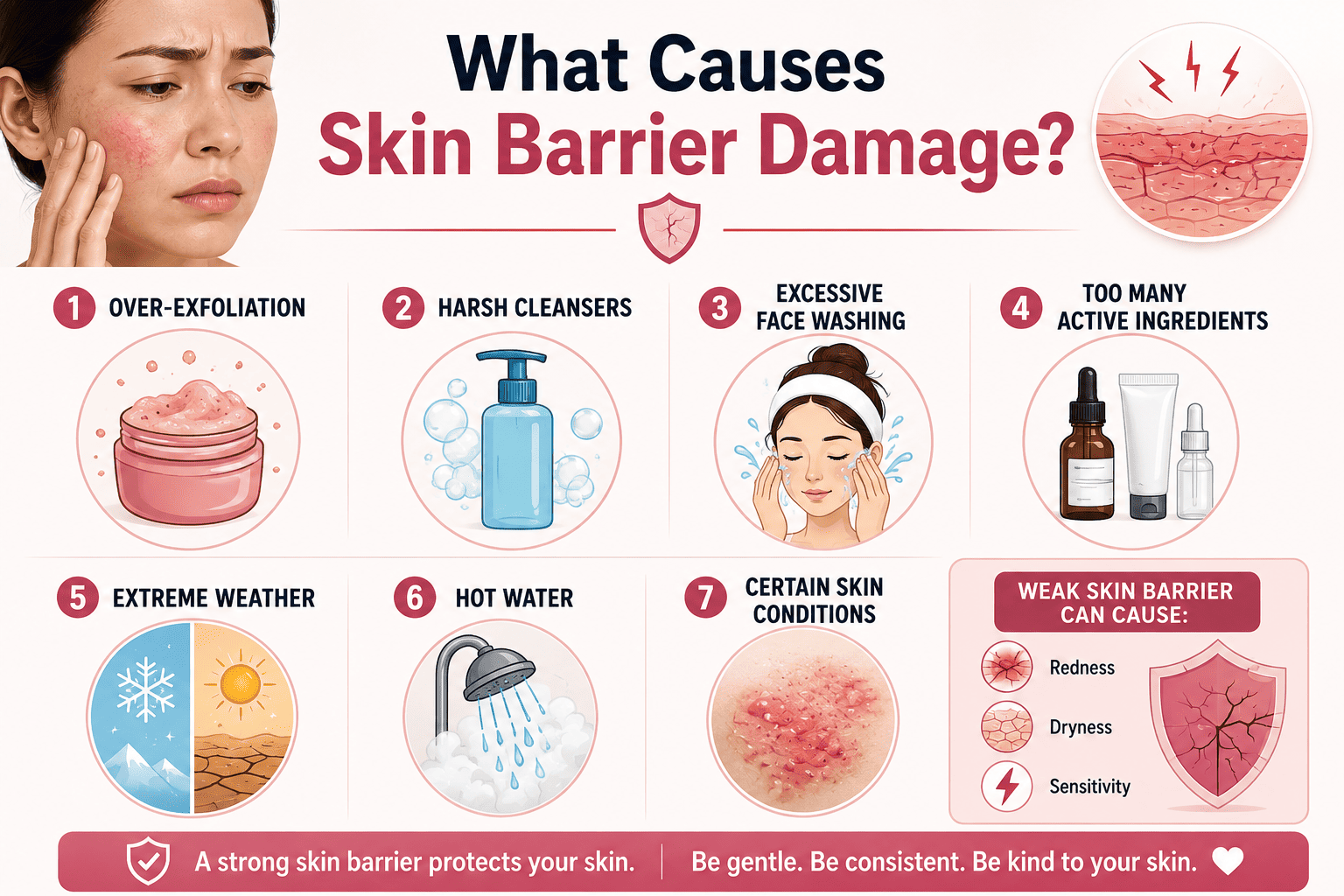
What Causes Skin Barrier Damage?
Several everyday habits and environmental factors can weaken the skin barrier.
1. Over-Exfoliation
Using exfoliating acids, scrubs or other exfoliating products too frequently can irritate the skin.
More exfoliation does not necessarily mean healthier skin. Overuse can remove protective components and increase sensitivity.
2. Harsh Cleansers
Strong cleansers can remove too much of the skin’s natural oil, leaving the skin feeling tight and dry.
A gentle cleanser is usually a better choice, especially if your skin is already irritated.
3. Excessive Face Washing
Washing your face repeatedly throughout the day can contribute to dryness and irritation.
For many people, cleansing gently once or twice a day is sufficient, depending on their skin type and routine.
4. Using Too Many Active Ingredients
Combining several active ingredients such as retinoids, exfoliating acids and acne treatments without allowing the skin to adjust can increase irritation.
A simple routine is often more appropriate when the skin barrier is compromised.
5. Extreme Weather
Cold temperatures, dry air, wind and very hot weather can increase skin dryness and contribute to barrier disruption.
6. Hot Water
Long, hot showers or washing your face with very hot water can remove natural oils from the skin and worsen dryness.
7. Certain Skin Conditions
Conditions such as eczema and other inflammatory skin disorders can impair the skin barrier and cause dryness, redness and sensitivity.
How to Repair a Damaged Skin Barrier
The goal of barrier repair is not to use more products. Instead, focus on gentle cleansing, hydration, moisturization and protection.
1. Simplify Your Skincare Routine
If your skin suddenly becomes irritated, temporarily reduce your routine to the basics:
Morning:
- Gentle cleanser, if needed
- Moisturizer
- Broad-spectrum sunscreen
Night:
- Gentle cleanser
- Moisturizer
Once your skin becomes comfortable again, introduce other products gradually.
2. Use a Gentle Cleanser
Choose a mild, fragrance-free cleanser that does not leave your skin feeling tight or stripped.
Avoid scrubbing your face aggressively while cleansing.
3. Apply a Moisturizer Regularly
Moisturizers help reduce water loss and support the skin’s protective barrier.
Look for ingredients commonly used in barrier-supporting moisturizers, such as:
- Ceramides
- Glycerin
- Hyaluronic acid
- Petrolatum
- Fatty acids
- Squalane
You do not need every ingredient in one product. Choose a moisturizer that your skin tolerates well.
4. Use Lukewarm Water
When washing your face, use lukewarm rather than very hot water.
After cleansing, gently pat your skin dry instead of rubbing it with a towel.
5. Avoid Scrubs and Strong Exfoliants Temporarily
If your skin is burning, peeling or highly sensitive, take a break from physical scrubs and strong exfoliating acids.
Once your skin has recovered, exfoliation can be reintroduced carefully if it is appropriate for your skin.
6. Wear Sunscreen Every Day
Sun exposure can contribute to skin damage and premature aging. Protect your skin with a broad-spectrum sunscreen with an appropriate SPF.
If your skin is sensitive, look for a sunscreen that feels comfortable and does not cause irritation.
7. Avoid Fragrance When Your Skin Is Irritated
Fragrance can irritate sensitive skin. During barrier recovery, choosing fragrance-free skincare products can help reduce potential irritation.
8. Stay Hydrated and Eat a Balanced Diet
Drinking enough fluids and eating a varied diet support overall health and skin function.
Include fruits, vegetables, whole grains, protein sources and healthy fats as part of a balanced diet.
However, drinking extra water alone cannot repair a severely damaged skin barrier. Consistent topical skincare and addressing the underlying cause are also important.
Natural Ways to Support Skin Barrier Repair
If you prefer a simple approach, focus on gentle habits rather than complicated DIY treatments.
Use a Gentle Moisturizing Product
Instead of applying kitchen ingredients directly to irritated skin, choose a simple, fragrance-free moisturizer formulated for sensitive skin.
Avoid Harsh DIY Remedies
Ingredients such as lemon juice, baking soda, undiluted vinegar and rough sugar scrubs can irritate the skin and may make barrier damage worse.
Natural ingredients are not automatically safer for damaged or sensitive skin.
Keep Your Routine Simple
When your skin is irritated, fewer products can make it easier to identify what is causing the problem. Give your skin time to recover before introducing new active ingredients.
How Long Does It Take to Repair the Skin Barrier?
The recovery time varies depending on how severely the barrier has been affected and what caused the damage.
Mild irritation may improve within days after removing the trigger and using gentle skincare. More significant or persistent irritation can take longer.
If your skin continues to burn, peel, itch or become inflamed despite simplifying your routine, seek advice from a dermatologist.
What Should You Avoid During Skin Barrier Repair?
While your skin is recovering, try to avoid:
- Physical face scrubs
- Frequent exfoliation
- Very hot water
- Strong cleansers
- Excessive face washing
- Multiple new skincare products
- Strong active ingredients
- Fragranced products if they irritate your skin
- Picking or scratching irritated skin
When Should You See a Dermatologist?
Not every case of redness or dryness is simply skin barrier damage.
Consult a dermatologist if you have:
- Severe or persistent redness
- Significant swelling
- Painful or burning skin
- Persistent itching
- Cracked or bleeding skin
- Oozing or crusting
- Symptoms that continue despite gentle skincare
- Frequent or worsening skin reactions
An underlying condition such as eczema, contact dermatitis or another inflammatory skin disorder may require specific treatment.
Final Thoughts
A damaged skin barrier can make your skin feel dry, tight, sensitive and irritated. The best approach is usually to simplify your skincare routine and focus on gentle cleansing, moisturization and sun protection.
Avoid aggressive exfoliation and harsh DIY treatments while your skin is recovering. With consistent care, the skin barrier can gradually return to a healthier state.
If your symptoms are severe, persistent or worsening, consult a dermatologist to identify the underlying cause and receive appropriate treatment.
Disclaimer: This article is intended for general educational purposes only and does not replace professional medical advice. If you have persistent skin irritation or an existing skin condition, consult a qualified dermatologist or healthcare professional.
Frequently Asked Questions (FAQs)
Common signs include dryness, flaking, redness, tightness, itching, burning or increased sensitivity. If skincare products that were previously comfortable suddenly sting, your skin may be irritated.
Keep your routine simple and gentle. Use a mild cleanser, apply a moisturizer regularly, avoid over-exfoliation and protect your skin from excessive sun exposure. Avoid harsh DIY ingredients that may cause further irritation.
It is generally better to pause potentially irritating active ingredients if your skin is burning, peeling or highly sensitive. Once your skin has recovered, introduce active products gradually and according to your skin’s tolerance.
Mild irritation may improve within several days, while more significant barrier disruption can take longer. The recovery period depends on the cause and severity of the irritation.
Adequate hydration is important for overall health, but drinking more water alone will not repair a damaged skin barrier. Gentle skincare, regular moisturization and avoiding irritating products are also important.