Table of Contents
ToggleOily Scalp and Dry Hair: Causes, Hair Care Routine, and Natural Tips
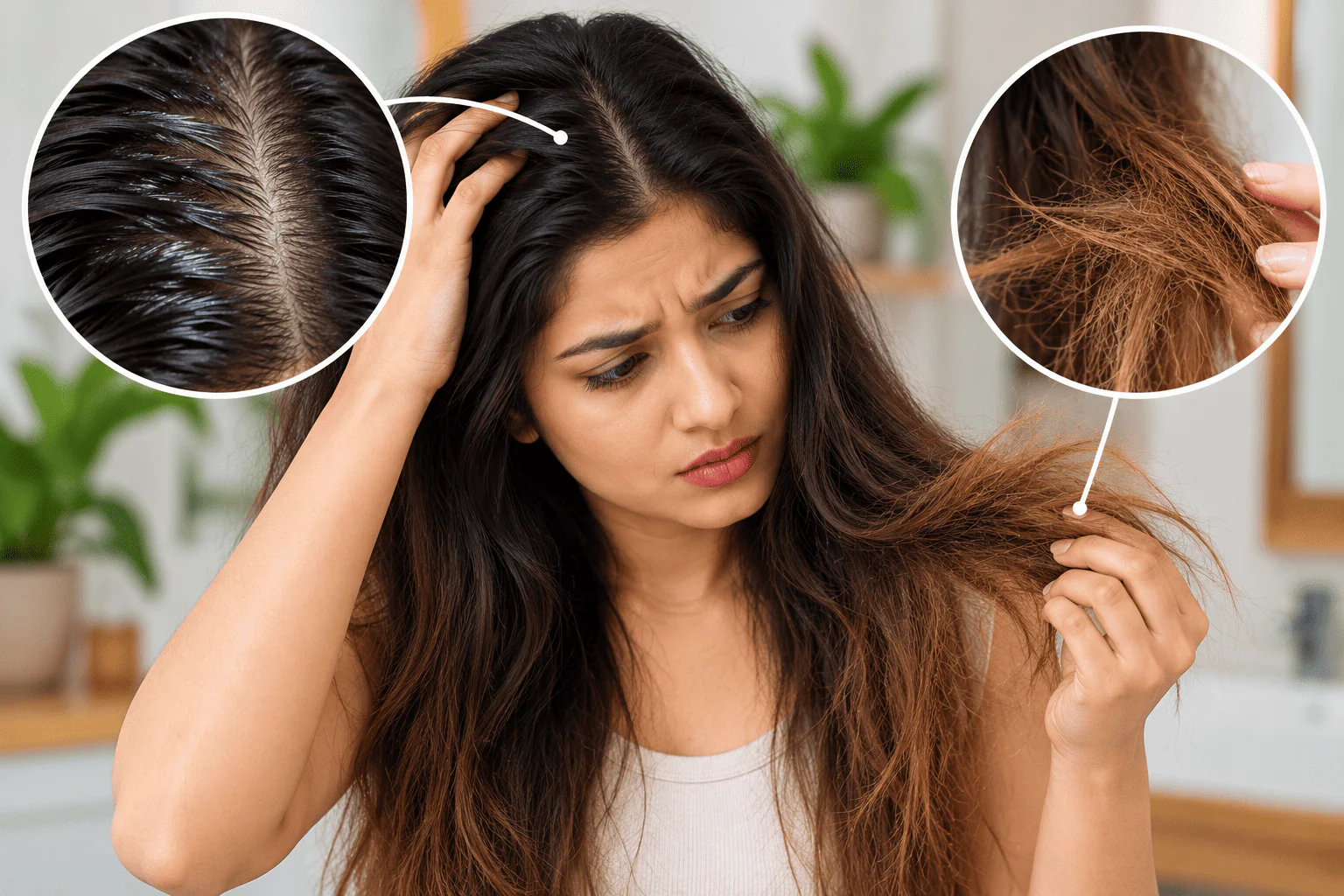
Having an oily scalp and dry hair at the same time can be frustrating. Your roots may look greasy just one day after washing, while your hair lengths feel rough, frizzy, tangled, or difficult to manage. This combination is relatively common and can occur when the scalp produces excess oil while the hair lengths lose moisture or become damaged.
Understanding the causes of an oily scalp and dry hair can help you choose a suitable hair-care routine. Gentle cleansing, proper conditioning, and a few simple hair-care habits may help manage excess oil at the roots while keeping the lengths softer and smoother.
In this article, we will discuss the common causes of oily scalp and dry hair, effective hair-care routines, natural tips, and mistakes to avoid for healthier-looking hair.
What Causes an Oily Scalp and Dry Hair?
The scalp contains sebaceous glands that produce sebum, a natural oil that helps lubricate the skin and hair. However, the amount of oil produced varies from person to person.
The hair lengths, particularly the ends, may become dry when their outer protective layer is damaged or when they lose moisture and surface lipids. Because the scalp and hair lengths have different needs, it is possible to experience greasy roots and dry ends simultaneously.
Common causes include:
1. Excess Sebum Production
Sebum helps protect the scalp and lubricate hair. However, naturally high oil production may make the roots appear greasy soon after shampooing.
Hormonal changes, genetics, and individual scalp characteristics can influence sebum production.
2. Frequent Heat Styling
Regularly using hair straighteners, curling irons, or high-heat blow-dryers can damage the hair cuticle. This may increase dryness, frizz, breakage, and split ends.
3. Harsh Shampoos
Some shampoos may leave the hair lengths feeling rough, especially when they contain cleansing ingredients that are too strong for your hair or when they are used excessively.
However, avoiding shampoo altogether is not the solution. The scalp still needs regular cleansing to remove excess oil, sweat, and product buildup.
4. Applying Conditioner to the Scalp
Conditioner helps smooth and detangle the hair, but applying a heavy formula directly to an oily scalp may make the roots feel greasy more quickly.
For many people with oily roots and dry ends, applying conditioner mainly to the mid-lengths and ends works better.
5. Product Buildup
Hair oils, styling creams, leave-in products, and dry shampoos can accumulate on the scalp and hair. Buildup may make the roots feel heavy or greasy and can sometimes contribute to scalp irritation.
6. Environmental Factors
Heat, humidity, sun exposure, wind, and dry indoor air can affect how the scalp and hair feel. Humid conditions may make oily roots more noticeable, while sun exposure and heat styling can contribute to dryness and damage along the hair lengths.
7. Scalp Conditions
Conditions such as seborrheic dermatitis may cause greasy scales, itching, and redness. Persistent flaking or irritation should not automatically be attributed to an oily scalp, as an underlying scalp condition may need treatment.
Signs You Have an Oily Scalp and Dry Hair
Recognizing the difference between scalp oiliness and dry hair can help you choose appropriate products.
Common signs include:
- Hair roots appear greasy or flat shortly after washing.
- Hair ends feel rough, dry, or brittle.
- Hair becomes tangled easily, especially near the ends.
- Hair lengths look frizzy despite an oily scalp.
- The scalp feels oily while the ends lack softness.
- Split ends or breakage become noticeable over time.
- Hair may feel heavy at the roots but dry when touched along the lengths.
If you also experience persistent itching, redness, thick scales, or significant hair loss, consider seeking advice from a dermatologist.
Best Hair Care Routine for Oily Scalp and Dry Hair
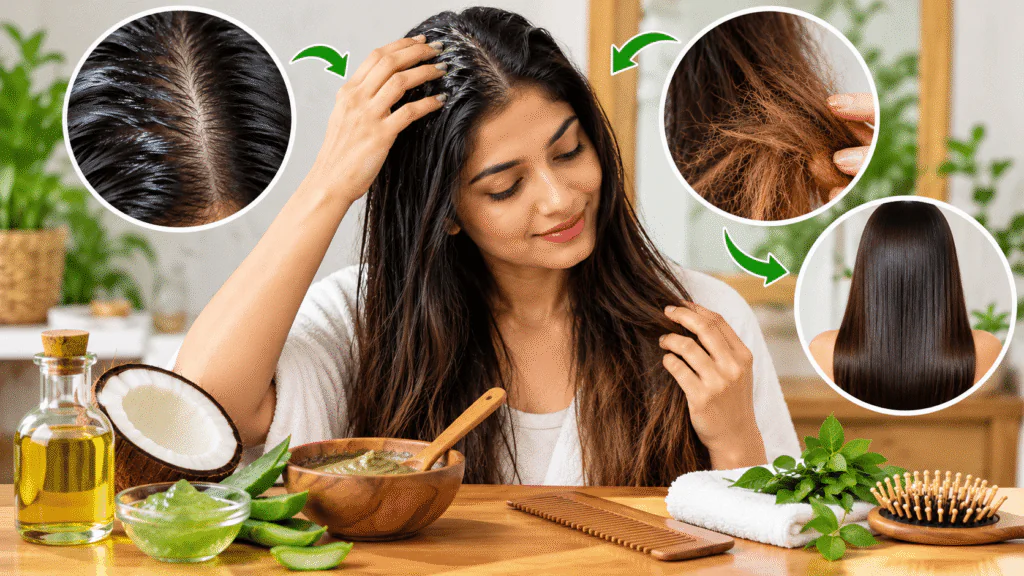
A balanced routine should remove excess oil from the scalp without unnecessarily drying the hair lengths.
Step 1: Choose a Suitable Shampoo
Select a shampoo formulated for your scalp type. A gentle shampoo designed for oily roots may be suitable, provided it does not leave your hair lengths excessively dry.
Focus on cleansing the scalp rather than vigorously rubbing shampoo through the entire length of your hair.
Helpful tip: If your scalp becomes greasy quickly, washing more frequently may be appropriate. There is no universal rule that everyone should wash their hair only two or three times a week.
Step 2: Shampoo the Scalp Properly
Wet your hair thoroughly with lukewarm water. Apply shampoo to the scalp and massage gently with your fingertips.
Avoid scratching with your nails or rubbing the hair lengths aggressively, as friction can contribute to breakage.
Rinse thoroughly to remove shampoo and loosened oil. If you use heavy styling products, a second gentle wash may occasionally be helpful.
Step 3: Apply Conditioner to the Hair Lengths
Conditioner is particularly useful when the hair ends feel dry, rough, or tangled.
Apply conditioner mainly from the mid-lengths to the ends, following the product instructions. Leave it on for the recommended time and rinse thoroughly.
Look for conditioners containing ingredients such as:
- Glycerin
- Cetearyl alcohol
- Behentrimonium chloride
- Dimethicone
- Other conditioning agents suitable for your hair type
These ingredients can help improve softness, reduce friction, and make hair easier to detangle.
Step 4: Use a Leave-In Conditioner if Needed
If your ends remain dry after washing, a lightweight leave-in conditioner may help.
Apply a small amount to damp hair, concentrating on the ends. Avoid applying too much product near the roots, particularly if your hair becomes oily quickly.
Step 5: Dry Your Hair Gently
Use a soft towel or cotton T-shirt to gently squeeze excess water from your hair instead of rubbing vigorously.
If you use a blow-dryer, choose a moderate or low heat setting and keep the dryer moving. Minimize frequent use of straighteners and curling irons to reduce further damage.
Step 6: Protect Your Hair Between Washes
A few simple habits can help keep the scalp comfortable and the lengths manageable:
- Avoid repeatedly touching your roots throughout the day.
- Clean brushes regularly to remove accumulated oil and product residue.
- Use dry shampoo occasionally if needed, but do not rely on it as a replacement for washing.
- Protect your hair from excessive sun exposure and high heat.
- Trim damaged split ends when necessary, as existing split ends cannot be permanently repaired with oils or masks.
Natural Tips for Oily Scalp and Dry Hair
Some simple hair-care practices can help manage oiliness and dryness without introducing potentially irritating ingredients.
1. Use Aloe Vera Carefully
Aloe vera is commonly used in hair-care products because it can provide a lightweight, soothing feel. However, evidence that aloe vera directly regulates scalp oil production or treats dry hair is limited.
How to use it:
- Choose a commercially prepared aloe vera product suitable for scalp use.
- Test a small amount on a limited area first.
- Follow the product instructions and rinse if irritation occurs.
- Discontinue use if you notice itching, redness, or discomfort.
Aloe vera is optional; a suitable shampoo and conditioner are generally more important for managing oily roots and dry ends.
2. Use Coconut Oil on Dry Hair Ends
Coconut oil has some evidence supporting its ability to reduce protein loss from hair when used as a pre-wash treatment. It may help improve the feel of dry lengths, although it does not treat the underlying cause of an oily scalp.
How to use it:
- Take a small amount of coconut oil.
- Apply it mainly to the mid-lengths and ends.
- Leave it on for around 20–30 minutes before washing.
- Shampoo thoroughly to remove excess oil.
Start with a small quantity because too much oil may make the hair feel heavy. Avoid applying it to an already oily or irritated scalp if it worsens your symptoms.
3. Try a Gentle Oatmeal-Based Scalp Product
Oatmeal is used in certain skincare products to soothe dry, irritated skin. However, evidence for homemade oatmeal mixtures as a treatment for an oily scalp is limited.
If your scalp is sensitive, consider a properly formulated product rather than rubbing homemade mixtures into your hair. Rinse products thoroughly and stop if irritation develops.
4. Maintain a Balanced Diet
Hair health depends partly on adequate nutrition. A balanced diet that includes protein, iron-rich foods, healthy fats, and a variety of vitamins and minerals helps support normal hair growth.
Useful food choices include:
- Eggs, beans, lentils, and other protein sources
- Nuts and seeds
- Leafy green vegetables
- Whole grains
- Fruits and vegetables of different colors
- Fish or suitable plant-based sources of essential fats
Taking high-dose hair supplements without a demonstrated deficiency is not recommended. Excessive amounts of certain nutrients can be harmful and may even contribute to hair loss.
5. Avoid Excessive Heat and Chemical Treatments
Frequent bleaching, coloring, chemical straightening, and high-heat styling can weaken the hair shaft.
Allow sufficient time between chemical treatments, use heat protection when styling, and avoid combining multiple damaging treatments whenever possible.
Best Ingredients to Look for in Hair Care Products
Choosing products according to their purpose can make your routine more effective.
Hair-care need | Ingredients or product types to consider |
Cleansing oily roots | A suitable shampoo formulated for oily scalps |
Conditioning dry ends | Cetearyl alcohol, behentrimonium chloride, or dimethicone |
Smoothing frizz | Silicone-based conditioners or suitable leave-in products |
Reducing friction | Lightweight conditioning products |
Managing persistent dandruff | An evidence-based anti-dandruff shampoo appropriate for the condition |
Ingredients should be selected according to your scalp condition and individual tolerance. A product marketed as natural is not automatically safer or more effective than a well-formulated conventional product.
Common Hair Care Mistakes to Avoid
If you have an oily scalp and dry hair, avoid these common mistakes:
1. Skipping Shampoo to Control Dryness
Not washing your hair enough may allow excess oil, sweat, and product residue to accumulate. Adjust washing frequency according to how quickly your scalp becomes oily.
2. Applying Heavy Oils Directly to the Scalp
Heavy oiling may make greasy roots more noticeable. For many people, applying a small amount to dry hair ends is a more practical approach.
3. Using Lemon Juice or Baking Soda
Lemon juice can irritate the scalp, while baking soda may disrupt the scalp’s natural surface conditions. Neither is a reliable treatment for oily roots or dry hair.
4. Scrubbing the Scalp Aggressively
Aggressive brushing, scratching, or exfoliating can irritate the scalp and increase hair breakage. Gentle fingertip massage is generally sufficient during washing.
5. Overusing Dry Shampoo
Dry shampoo absorbs some oil but does not clean the scalp as effectively as washing. Excessive use without regular cleansing may contribute to buildup and discomfort.
6. Expecting Oils to Repair Split Ends Permanently
Conditioning products and oils may temporarily smooth the hair surface and reduce friction, but they cannot permanently reconnect split ends. Trimming damaged ends is the most reliable way to remove them.
When Should You See a Dermatologist?
An oily scalp and dry hair can often be managed with suitable hair-care products. However, persistent symptoms may indicate an underlying condition.
Consult a dermatologist if you experience:
- Persistent itching, redness, or burning
- Thick or recurring scalp scales
- Painful bumps or sores on the scalp
- Sudden or significant hair shedding
- Bald patches or noticeable thinning
- Symptoms that continue despite an appropriate hair-care routine
A dermatologist can help determine whether you have seborrheic dermatitis, eczema, another scalp condition, or a separate cause of hair loss.
Conclusion
Managing an oily scalp and dry hair requires a routine that addresses both concerns separately. Gentle scalp cleansing helps remove excess oil, while conditioner and suitable leave-in products can improve the softness and manageability of dry hair lengths.
Natural options such as coconut oil on the ends may be useful for some people, but avoid harsh home remedies and excessive product use. A balanced diet, gentle handling, and reduced heat styling can also help maintain healthier-looking hair.
If you experience persistent scalp irritation, severe flaking, or unusual hair loss, consult a dermatologist to identify the cause and receive appropriate treatment.
Medical Disclaimer: This article is intended for general educational purposes only and does not replace professional medical advice, diagnosis, or treatment. Consult a qualified healthcare professional for persistent scalp problems or unexplained hair loss.
Frequently Asked Questions (FAQs)
Your scalp produces natural oil, while the hair lengths can become dry due to heat styling, chemical treatments, friction, or environmental exposure. The scalp and hair lengths have different needs, so both conditions can occur together.
Wash as often as necessary to keep your scalp clean and comfortable. Some people with oily scalps benefit from daily or alternate-day washing, while others need less frequent cleansing. Choose a shampoo that does not leave the lengths excessively dry.
Not necessarily. If your scalp becomes greasy quickly, focus on cleansing the scalp and apply small amounts of oil to the dry mid-lengths and ends if needed.
Coconut oil may reduce hair protein loss when used as a pre-wash treatment and can help improve the feel of dry hair. However, results vary, and it should not be expected to treat scalp disorders or permanently repair split ends.
Heavy conditioner applied directly to the roots may make some hair types feel greasy or weighed down. Applying conditioner mainly to the mid-lengths and ends may work better for people with oily roots.
About the Author
About HealthCureRemedies Editorial Team
The HealthCureRemedies Editorial Team creates educational content about natural remedies, wellness, and everyday self-care. Our articles aim to explain traditional practices while encouraging readers to make informed and responsible decisions.
Editorial Note: Homemade remedies may affect individuals differently and are not guaranteed treatments for hair-color changes or hair loss. Seek professional guidance for persistent or concerning symptoms.