Table of Contents
ToggleSigns of Dehydration: Common Symptoms, Causes, and Healthy Hydration Tips
Water plays an essential role in maintaining overall health. Your body needs adequate fluids to regulate temperature, support digestion, transport nutrients, and maintain normal blood circulation. When your body loses more fluids than you take in, dehydration can occur.
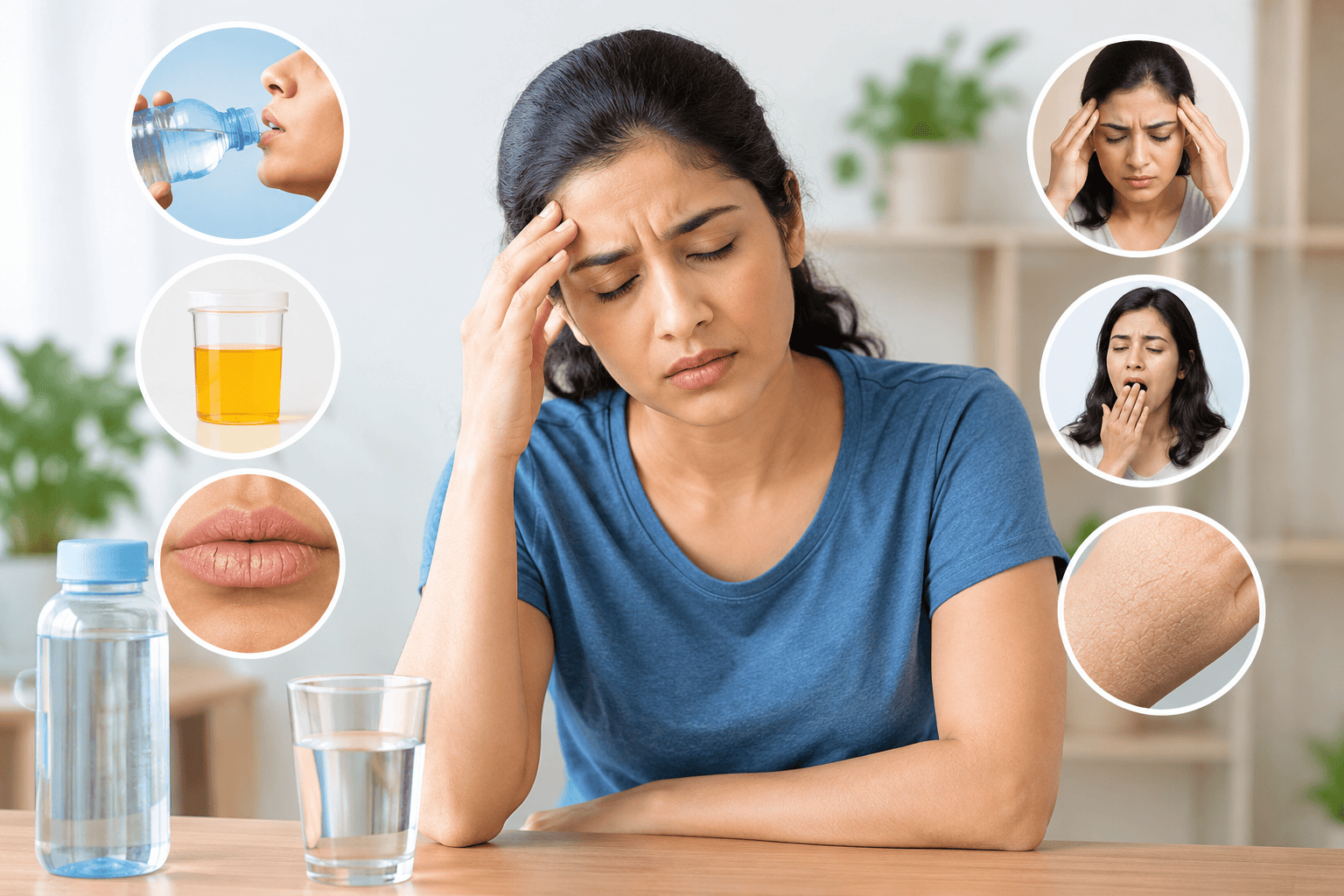
Recognizing the signs of dehydration early can help you take appropriate steps to restore lost fluids and prevent symptoms from becoming more serious. Common symptoms include thirst, dark-colored urine, dry mouth, headache, tiredness, and dizziness. However, symptoms can vary depending on the severity of dehydration and the person’s age and health.
In this article, we will discuss the common signs of dehydration, its possible causes, practical hydration tips, and when to seek medical attention.
What Is Dehydration?
Dehydration occurs when your body does not have enough fluid to function normally. It can develop when you do not drink enough water or other fluids, or when your body loses excessive amounts of fluid through sweating, vomiting, diarrhea, or frequent urination.
Mild dehydration may improve when you replace lost fluids. However, severe dehydration can become a medical emergency, particularly in young children, older adults, and people with certain medical conditions.
Your daily fluid needs depend on several factors, including physical activity, weather conditions, diet, age, and overall health. There is no single amount of water that is appropriate for everyone.
Common Signs and Symptoms of Dehydration
The symptoms of dehydration can range from mild discomfort to serious warning signs. Recognizing changes in how you feel and how often you urinate can help you identify a possible problem.
1. Increased Thirst
Feeling thirsty is one of the most common early signs that your body needs more fluids.
You may notice increased thirst after exercising, spending time outdoors in hot weather, or eating a particularly salty meal. Although thirst is a useful signal, it may not always be a reliable early warning for older adults or people with certain medical conditions.
What you can do: Drink water regularly throughout the day and increase fluid intake when you sweat more than usual, unless your healthcare professional has advised you to restrict fluids.
2. Dark Yellow Urine
Urine color can provide a helpful indication of hydration status. Dark yellow urine and passing urine less frequently than usual may suggest that you need more fluids.
However, urine color can also be affected by vitamins, medications, certain foods, and medical conditions. Therefore, it should not be used as the only way to diagnose dehydration.
What you can do: Pay attention to changes in urine color and frequency. For many healthy adults, pale yellow urine is a reasonable general guide, but individual circumstances vary.
3. Dry Mouth and Lips
When your body lacks sufficient fluids, you may experience a dry mouth, sticky saliva, or dry lips. These symptoms can also occur because of mouth breathing, medications, or other health conditions.
What you can do: Sip water regularly and avoid excessive alcohol consumption. If dry mouth persists despite adequate fluid intake, consider seeking medical advice.
4. Headache
Some people experience headaches when they become dehydrated. Fluid loss may contribute to discomfort, particularly after prolonged sweating, exercise, or illness.
However, headaches have many possible causes, so dehydration should not automatically be assumed to be the reason.
What you can do: If you suspect mild dehydration, rest in a cool place and drink fluids. Seek urgent medical attention for a sudden, severe headache or a headache accompanied by confusion, weakness, or other concerning symptoms.
5. Tiredness and Low Energy
Dehydration may contribute to fatigue, weakness, and reduced physical performance. Even a relatively small fluid deficit can make some activities feel more difficult.
Other conditions, including poor sleep, anemia, infections, and nutritional deficiencies, can also cause tiredness.
What you can do: Maintain regular fluid intake and eat balanced meals. If fatigue continues despite adequate hydration and rest, consult a healthcare professional.
6. Dizziness or Lightheadedness
Fluid loss can reduce blood volume and contribute to dizziness, especially when standing up quickly. This may occur after heavy sweating, vomiting, diarrhea, or prolonged exposure to hot weather.
What you can do: Sit or lie down if you feel dizzy, move to a cooler environment, and drink fluids if you are fully alert and able to swallow safely. Persistent dizziness, fainting, or severe weakness requires prompt medical assessment.
7. Reduced Urination
Passing urine less frequently than usual can be a sign that your body is conserving water.
This symptom can occur during dehydration, but it may also indicate a kidney problem, urinary obstruction, or another medical condition.
What you can do: Monitor changes in urination, particularly during hot weather or illness. Very little or no urine, especially when accompanied by weakness, confusion, or ongoing fluid loss, needs urgent medical attention.
8. Dry Skin
Dry skin may occur alongside dehydration, but it is not a reliable sign of dehydration by itself. Weather, frequent washing, skin conditions, and aging can also cause dryness.
What you can do: Drink an appropriate amount of fluid and use a suitable moisturizer if your skin feels dry. Persistent skin problems may need separate treatment.
9. Muscle Cramps
Muscle cramps may occur during prolonged exercise or heavy sweating. Fluid loss and changes in electrolytes can contribute, although cramps have several other possible causes.
What you can do: Take breaks during exercise, cool down, and replace fluids lost through sweating. After prolonged, intense exercise or heavy sweating, an appropriate electrolyte-containing drink may be useful.

What Causes Dehydration?
Dehydration can develop for several reasons. Understanding the cause can help you reduce your risk.
1. Not Drinking Enough Fluids
Busy schedules, limited access to drinking water, reduced thirst, or simply forgetting to drink can contribute to inadequate fluid intake.
2. Hot Weather and Excessive Sweating
Hot and humid weather can increase sweating, especially during outdoor work, exercise, or travel. If the lost fluids are not replaced, dehydration may develop.
3. Vomiting and Diarrhea
Vomiting and diarrhea can cause rapid fluid and electrolyte loss. This is particularly concerning for infants, young children, older adults, and people who cannot keep fluids down.
4. Fever and Illness
Fever can increase fluid requirements. Illness may also reduce appetite and fluid intake, increasing the risk of dehydration.
5. Frequent Urination
Conditions such as uncontrolled diabetes can cause excessive urination and increase fluid loss. Certain medications, including diuretics, may also increase urination.
6. Intense Physical Activity
Exercise and physical work can cause significant sweating. Fluid needs may rise depending on exercise duration, intensity, clothing, and environmental temperature.
7. Older Age
Older adults may have a reduced sense of thirst or face challenges that make drinking fluids more difficult. Certain medications and health conditions may also increase their risk.
How to Stay Hydrated: Healthy Hydration Tips
Maintaining hydration does not require complicated routines. Simple habits can help you replace fluids throughout the day.
1. Drink Water Regularly
Keep drinking water accessible and take regular drinks throughout the day. You do not need to wait until you feel extremely thirsty to drink.
Your needs may increase during exercise, hot weather, fever, or illness.
2. Include Water-Rich Foods
Foods containing plenty of water can contribute to your overall fluid intake.
Examples include:
- Watermelon
- Cucumber
- Oranges
- Strawberries
- Tomatoes
- Soups and broths
These foods can complement drinking water but should not replace appropriate fluid intake when you are losing substantial amounts of fluid.
3. Increase Fluids During Hot Weather
If you spend time outdoors in hot conditions, take regular breaks in shaded or cool areas and drink fluids more frequently.
For prolonged physical activity, consider your individual sweating rate and the duration of exercise. Avoid forcing excessive amounts of water, as drinking too much can also cause dangerous electrolyte disturbances.
4. Replace Fluids After Exercise
Water is usually sufficient for ordinary daily activities and many short exercise sessions.
During prolonged vigorous exercise or substantial sweating, an electrolyte-containing drink may help replace both fluids and salts. Individual needs vary, especially for people with medical conditions.
5. Use Oral Rehydration Solution When Appropriate
Oral rehydration solution (ORS) contains water, salts, and glucose in specific proportions to help the body absorb fluids and electrolytes.
It can be particularly useful during diarrhea and vomiting. Use a commercially prepared ORS sachet according to the package instructions, mixing it with exactly the specified amount of safe water.
Do not make concentrated mixtures or add extra salt or sugar. Seek medical advice if symptoms are severe, fluids cannot be kept down, or dehydration is suspected in an infant or vulnerable adult.
6. Drink Fluids With Regular Meals
Drinking water with meals and snacks can make it easier to maintain fluid intake. Soups, milk, and other suitable beverages also contribute to hydration.
People who have been advised to restrict fluids because of heart, kidney, or other medical conditions should follow their healthcare professional’s guidance rather than increasing fluid intake independently.
7. Limit Excessive Alcohol
Alcohol can increase urination in certain circumstances and may interfere with normal hydration habits. Water and other appropriate non-alcoholic drinks are better choices for routine hydration.
8. Monitor Your Body During Illness
If you have fever, vomiting, or diarrhea, pay attention to fluid intake, urine output, and how you feel. Take small, frequent sips if drinking large amounts at once causes nausea.
Persistent vomiting, severe diarrhea, or signs of significant dehydration may require medical treatment.
How Much Water Should You Drink Every Day?
There is no universal daily water target that suits everyone. Fluid needs vary according to age, body size, activity level, climate, diet, pregnancy, breastfeeding, and medical conditions.
You can use these general guidelines:
- Drink regularly throughout the day rather than relying entirely on occasional large amounts.
- Increase fluid intake when sweating more than usual, unless you have a prescribed fluid restriction.
- Include fluids from food and beverages when considering your overall hydration.
- Pay attention to thirst, urine patterns, and changes in your physical condition.
- Ask a healthcare professional for individualized guidance if you have a condition that affects fluid balance.
The commonly repeated advice to drink exactly eight glasses of water every day is not a universal medical requirement. Some people need more, while others need less.
Who Is at Higher Risk of Dehydration?
Certain groups may be more vulnerable to dehydration and its complications.
Infants and Young Children
Children can lose fluids quickly during vomiting, diarrhea, or fever. Warning signs include fewer wet diapers, a dry mouth, unusual sleepiness, and reduced activity.
Seek prompt medical advice if a young child shows signs of dehydration, particularly if they cannot drink or keep fluids down.
Older Adults
Older adults may have a weaker thirst response or take medications that affect fluid balance. Family members and caregivers can help by making suitable drinks accessible and watching for changes in alertness or urination.
People Who Exercise or Work Outdoors
Individuals who exercise intensely or work in hot environments may lose substantial fluids through sweating. Scheduled hydration breaks and access to cool areas can help reduce risk.
People With Chronic Medical Conditions
People with diabetes, kidney disease, heart disease, or conditions affecting fluid balance may require specific hydration guidance. Some need to replace fluids carefully, while others may have restrictions.
When Is Dehydration a Medical Emergency?
Mild dehydration may improve with appropriate fluid replacement. Severe dehydration, however, can be life-threatening and may require emergency treatment.
Seek emergency medical care if you or someone else experiences:
- Confusion, disorientation, or unusual difficulty staying awake
- Fainting or loss of consciousness
- Severe weakness or inability to stand safely
- Very little or no urine alongside other serious symptoms
- Rapid breathing or a racing heartbeat with significant illness
- Inability to keep fluids down with worsening symptoms
Do not delay emergency care while trying home remedies. If someone is unconscious or cannot swallow safely, do not give them anything by mouth.
Conclusion
Recognizing the signs of dehydration can help you take action before fluid loss becomes more serious. Thirst, dry mouth, dark urine, reduced urination, fatigue, headaches, and dizziness may indicate that your body needs more fluids, although these symptoms can have other causes.
You can support healthy hydration by drinking water regularly, eating water-rich foods, replacing fluids lost through sweating or illness, and using oral rehydration solution when appropriate.
Most importantly, pay attention to your body’s needs and seek medical attention when symptoms are severe or do not improve. Healthy hydration habits, combined with timely medical care when necessary, can help support your overall well-being.
Medical Disclaimer: This article is intended for general educational purposes only and does not replace professional medical advice, diagnosis, or treatment. Seek guidance from a qualified healthcare professional for persistent symptoms, significant fluid loss, or medical conditions that affect hydration.
Frequently Asked Questions (FAQs)
Early signs can include thirst, dry mouth, darker urine, reduced urination, and tiredness. Symptoms vary, and no single sign confirms dehydration on its own.
Yes, dehydration may contribute to headaches in some people. However, headaches can have many causes, so persistent or severe symptoms should be assessed appropriately.
For mild dehydration, drinking water and other suitable fluids may help. When vomiting or diarrhea causes significant fluid and electrolyte loss, an appropriately prepared oral rehydration solution may be more suitable. Severe dehydration requires urgent medical treatment.
Yes. Water-rich fruits such as watermelon, oranges, and strawberries contribute to daily fluid intake. They complement drinking fluids rather than replacing them during substantial fluid loss.
No. Dark urine may suggest concentrated urine, but vitamins, medicines, foods, and certain medical conditions can also change urine color. Consider the overall pattern and other symptoms.
About the Author
About HealthCureRemedies Editorial Team
The HealthCureRemedies Editorial Team creates educational content about natural remedies, wellness, and everyday self-care. Our articles aim to explain traditional practices while encouraging readers to make informed and responsible decisions.
Editorial Note: Homemade remedies may affect individuals differently and are not guaranteed treatments for hair-color changes or hair loss. Seek professional guidance for persistent or concerning symptoms.