Table of Contents
ToggleScalp Buildup: Causes, Symptoms & How to Remove It Safely
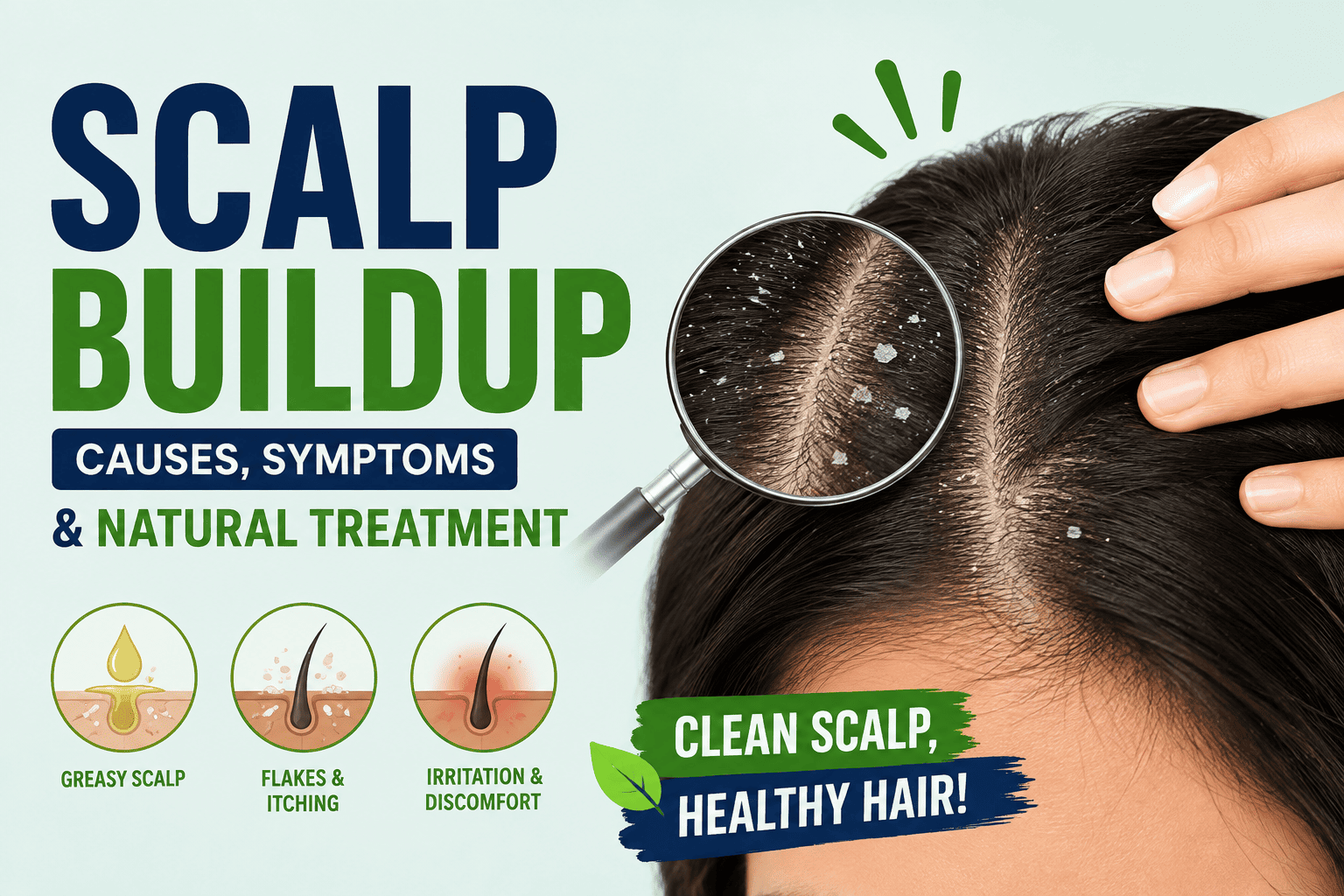
Scalp buildup is a common hair-care concern that can leave your scalp feeling greasy, itchy, or uncomfortable. It develops when substances such as excess oil, dead skin cells, sweat, dirt, and leftover hair products collect on the scalp.
Occasional buildup can often be managed with a suitable cleansing routine. However, ongoing itching, flaking, or irritation may sometimes be linked to dandruff, seborrheic dermatitis, psoriasis, or another scalp condition.
Understanding the possible causes and symptoms can help you choose a gentle scalp-care routine and recognise when professional advice may be needed.
What Is Scalp Buildup?
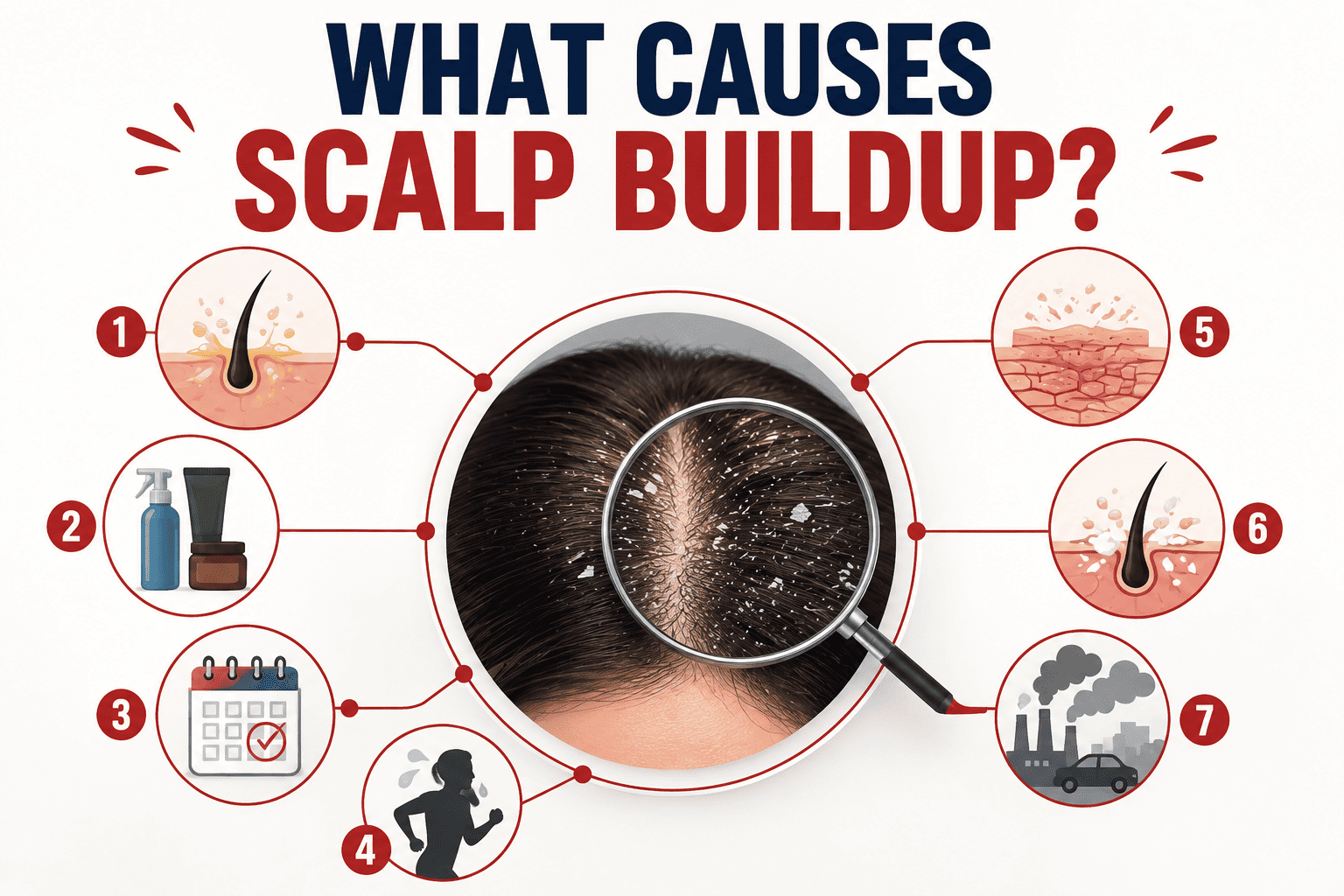
Scalp buildup can develop for several reasons. Your scalp type, cleansing routine, hair products, and existing skin conditions may all play a role.
1. Excess Oil Production
The scalp naturally produces sebum, an oil that helps protect the skin and hair. However, when excess sebum combines with dead skin cells and product residue, it can contribute to buildup.
People with naturally oily scalps may notice that their hair becomes greasy more quickly or that residue accumulates more often.
2. Frequent Use of Hair Products
Hair sprays, gels, styling creams, dry shampoos, serums, and heavy oils can leave residue behind. Using several products regularly without thoroughly cleansing the scalp may increase product accumulation.
Try using only the amount of product you need and rinse your hair carefully during washing.
3. Infrequent Hair Washing
When the scalp is not cleansed often enough for your individual needs, oil, sweat, dead skin cells, and styling-product residue may accumulate.
However, there is no single washing schedule that suits everyone. The right frequency depends on your hair type, scalp condition, activity level, and the products you use.
4. Sweat and Environmental Dirt
Exercise, hot weather, and daily activities can leave sweat and environmental dirt on the scalp. When these substances mix with natural oil and hair products, they may contribute to a greasy or uncomfortable feeling.
If you sweat heavily, washing your scalp when needed can help remove accumulated residue.
5. Dry Scalp
A dry scalp can produce flakes that may look similar to product buildup. Cold weather, harsh shampoos, and excessive washing may contribute to dryness or irritation.
If your scalp feels tight or dry and produces small flakes, the issue may not be buildup alone.
6. Dandruff and Other Scalp Conditions
Persistent flakes, itching, or redness may be associated with dandruff or another scalp condition rather than simple residue.
Conditions such as seborrheic dermatitis and psoriasis can cause ongoing flaking and irritation. If symptoms continue despite a suitable cleansing routine, consult a healthcare professional for an assessment.
Symptoms of Scalp Buildup
The signs of scalp buildup can differ depending on the cause and the condition of your scalp.
Common symptoms may include:
- An oily or greasy scalp
- White or yellowish flakes
- Itching or discomfort
- A feeling of residue on the scalp
- Small bumps on the scalp
- Unpleasant scalp odor
- Hair that looks dull or feels weighed down
- A scalp that feels greasy soon after washing
These symptoms do not always mean that buildup is the only problem. Persistent or severe symptoms may need professional evaluation.
Natural Ingredients for Scalp Care
Some natural ingredients are commonly used in home scalp-care routines. However, evidence supporting many DIY scalp treatments is limited, and natural ingredients can still cause irritation or allergic reactions.
Aloe Vera
Aloe vera gel is often used in personal-care routines because it may feel soothing on the skin. If you choose to apply it to your scalp, select a simple product without unnecessary fragrances or additives.
Test it on a small area first and discontinue use if you notice itching, redness, burning, or irritation.
Diluted Apple Cider Vinegar
Apple cider vinegar is sometimes used as a scalp rinse in home-care routines. However, undiluted vinegar can irritate the skin and may cause burns.
If you decide to try it, dilute it properly and avoid applying it to broken, inflamed, irritated, or sensitive skin. It is not a proven treatment for scalp conditions.
Tea Tree Oil
Tea tree oil is included in some scalp-care products because it has antimicrobial properties. However, concentrated tea tree oil should never be applied directly to the scalp.
Use only an appropriately diluted product, follow its instructions, and perform a patch test before applying it more widely. Stop using it if irritation or an allergic reaction develops.
What to Avoid for Scalp Buildup
Some home remedies and cleansing methods can irritate the scalp or worsen discomfort.
Avoid:
- Scrubbing your scalp aggressively
- Scraping flakes with your fingernails
- Applying undiluted essential oils
- Using undiluted apple cider vinegar
- Applying baking soda directly to the scalp
- Using excessive amounts of hair oil
- Starting several new scalp treatments at once
A gentle, consistent routine is generally preferable to harsh or frequent scalp treatments.
How to Prevent Scalp Buildup
A few practical habits may help reduce recurring residue and keep your scalp feeling clean.
- Wash according to your scalp and hair type. Adjust your cleansing routine to your individual needs.
- Rinse thoroughly. Make sure shampoo and conditioner are properly washed out.
- Use styling products moderately. Avoid applying more product than necessary.
- Clean your combs and brushes. Remove trapped hair and residue regularly.
- Avoid excessive scalp oiling. Use hair oils sparingly if they contribute to greasiness.
- Clean your scalp after heavy sweating when needed. This can help remove sweat and accumulated dirt.
- Avoid scratching or harsh scrubbing. Gentle cleansing helps reduce unnecessary irritation.
- Pay attention to persistent symptoms. Ongoing itching or flaking may need a different approach than routine cleansing.
When Should You See a Doctor?
Not every itchy or flaky scalp is caused by ordinary product buildup. Persistent symptoms may be related to an underlying scalp condition that requires specific care.
Consider consulting a dermatologist or healthcare professional if you experience:
- Severe or persistent itching
- Redness or swelling
- Scalp pain or tenderness
- Thick or persistent scales
- Bleeding, sores, or broken skin
- Noticeable hair loss
- Symptoms that do not improve with regular cleansing
These signs may be associated with dandruff, seborrheic dermatitis, psoriasis, fungal infection, or another scalp condition. A healthcare professional can help identify the cause and recommend appropriate treatment.
Final Thoughts
Scalp buildup can occur when excess oil, dead skin cells, sweat, dirt, and hair-product residue collect on the scalp. A suitable cleansing routine, thorough rinsing, and moderate use of styling products can help manage everyday buildup.
Natural ingredients such as aloe vera, diluted apple cider vinegar, and tea tree oil are sometimes used in scalp-care routines, but they are not guaranteed treatments and may irritate the skin. Use them cautiously and avoid harsh DIY methods.
If itching, redness, thick scaling, discomfort, or hair loss continues, seek professional advice to identify the underlying cause rather than assuming it is simple scalp buildup.
Disclaimer: This article is intended for general educational purposes only and should not replace professional medical advice, diagnosis, or treatment. Consult a qualified healthcare professional or dermatologist for persistent scalp symptoms or personalised treatment guidance.
Frequently Asked Questions (FAQs)
Scalp buildup commonly develops when excess oil, dead skin cells, sweat, dirt, and hair-product residue collect on the scalp. Infrequent cleansing and frequent use of heavy styling products may make it more noticeable.
Start with a gentle cleansing routine that suits your scalp and hair type. Rinse shampoo and conditioner thoroughly, limit heavy styling products, and avoid aggressive scrubbing. Some people use ingredients such as aloe vera or diluted apple cider vinegar, but these are not proven treatments and may cause irritation.
Scalp buildup itself does not necessarily cause hair loss. However, persistent itching, inflammation, or an underlying scalp condition may affect scalp and hair health. If you notice significant or ongoing hair loss, consult a dermatologist.
The ideal washing frequency varies depending on your scalp type, hair texture, activity level, and product use. Wash often enough to keep your scalp comfortable and clean, while avoiding products or routines that cause dryness or irritation.
No. Scalp buildup refers to the accumulation of oil, dead skin cells, sweat, dirt, or product residue. Dandruff is a scalp condition that can cause visible flakes and itching. Because the symptoms can look similar, persistent flaking may need professional evaluation.
About the Author
HealthCureRemedies Editorial Team
The HealthCureRemedies Editorial Team shares easy-to-understand information on wellness, hair care, nutrition, personal care, and healthy lifestyle habits. Our goal is to help readers make informed decisions through practical educational content.
Editorial Approach
Our content focuses on general wellness information and everyday personal-care practices. We encourage readers to follow established healthcare guidance and consult qualified professionals when they have persistent symptoms or specific health concerns.
Important Note
This article is intended for general informational purposes only. It is not a substitute for professional medical advice, diagnosis, or treatment. Consult a qualified dermatologist or healthcare professional for personalised guidance about scalp buildup, persistent irritation, or hair and scalp conditions.