Table of Contents
ToggleHow to Use Rosemary Water for Hair Growth
Rosemary water has gained popularity as a simple natural addition to hair-care routines, especially among people looking to maintain a healthier scalp and stronger-looking hair. This homemade preparation is made by steeping or simmering rosemary leaves in water and can be used as a scalp spray or hair rinse.
Although rosemary has received scientific interest for hair care, most research has focused on rosemary oil rather than homemade rosemary water. Therefore, rosemary water should be viewed as a supportive hair-care practice rather than a guaranteed solution for hair loss or hair growth.
What Is Rosemary Water?
Rosemary water is a herbal infusion made by boiling or steeping fresh or dried rosemary leaves in water. Once the mixture has cooled and been strained, the liquid can be applied to the scalp or hair.
Rosemary naturally contains various plant compounds with antioxidant properties. These properties are one reason rosemary has traditionally been included in different scalp and hair-care practices.
Potential Benefits of Rosemary Water for Hair
Adding rosemary water to your hair-care routine may provide several potential benefits:
1. May Support a Healthy Scalp
Maintaining a clean and healthy scalp is an important part of overall hair care. Rosemary contains naturally occurring compounds with antioxidant and antimicrobial properties. However, more research is needed to determine how effectively rosemary water itself may benefit scalp health.
2. May Help Minimize Hair Breakage
Gentle hair care and adequate moisture can help reduce unnecessary hair breakage. As a light rinse or spray, rosemary water may help hair feel softer and easier to manage for some people.
3. May Support Hair Growth
Rosemary has attracted attention for its possible connection with hair growth because rosemary oil has been studied in people experiencing hair loss. However, these findings should not be directly interpreted as evidence that homemade rosemary water has the same effect.
At present, more research is required to establish whether rosemary water can produce noticeable improvements in hair growth.
4. Offers a Simple Natural Hair-Care Option
Rosemary water is relatively inexpensive and can be prepared at home using a few simple ingredients. It can be incorporated into a basic hair-care routine without requiring complicated products.
How to Make Rosemary Water for Hair
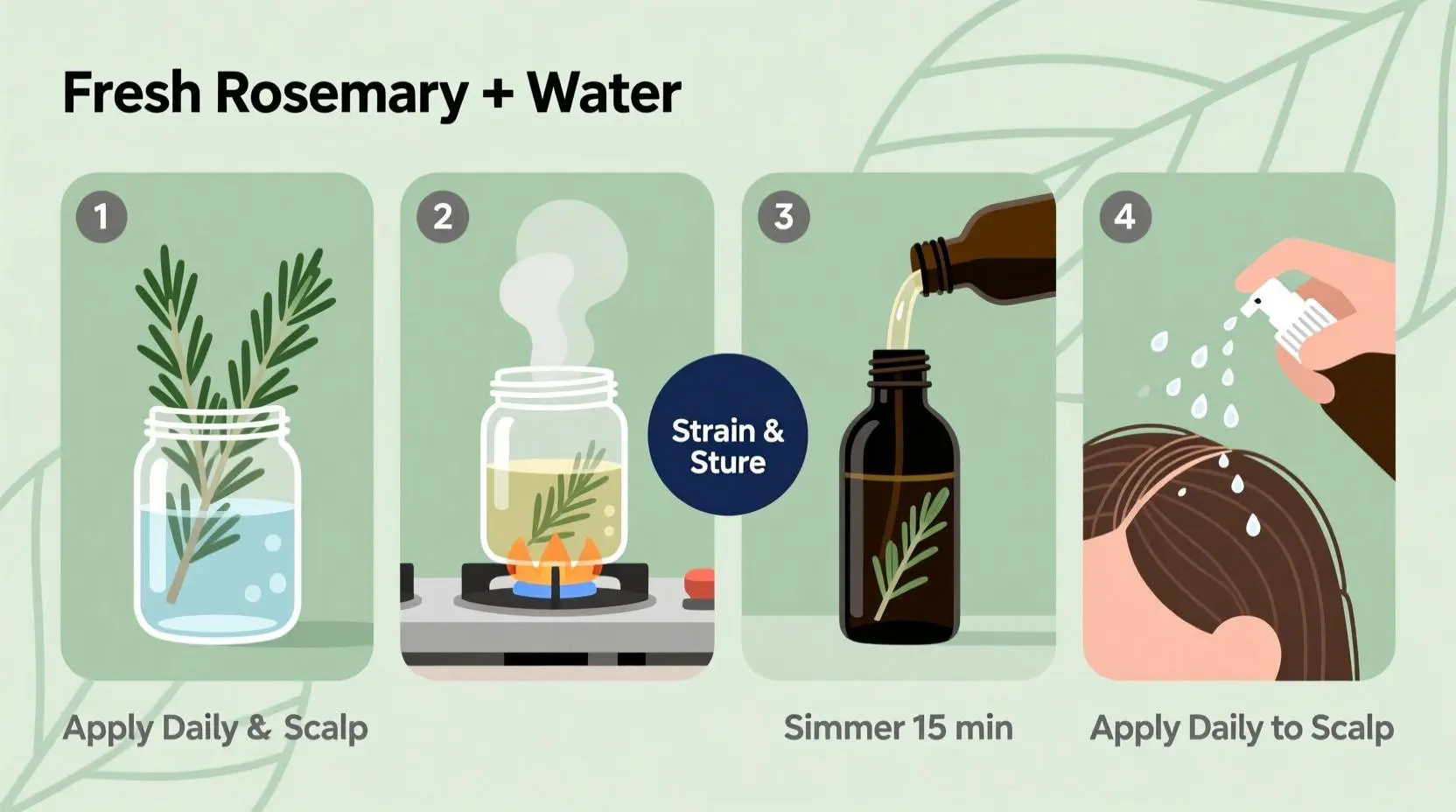
Making rosemary water at home is relatively simple. You can use either fresh rosemary sprigs or dried rosemary leaves.
Ingredients
- 2–3 fresh rosemary sprigs or 1–2 tablespoons of dried rosemary
- 2 cups of water
Preparation Method
- Pour the water into a clean saucepan.
- Add the fresh or dried rosemary.
- Bring the water to a gentle boil.
- Lower the heat and simmer for around 10–15 minutes.
- Turn off the heat and let the mixture cool completely.
- Strain the rosemary leaves from the liquid.
- Pour the prepared rosemary water into a clean spray bottle or storage container.
For better hygiene, keep homemade rosemary water refrigerated and prepare a fresh batch regularly instead of storing it for an extended period.
How to Use Rosemary Water for Hair Growth
There are several simple ways to include rosemary water in your hair-care routine.
Method 1: Use Rosemary Water as a Scalp Spray
A scalp spray is one of the most convenient ways to apply rosemary water.
- Wash your hair with your usual shampoo.
- Let your hair become slightly damp.
- Spray the rosemary water directly onto your scalp.
- Massage the scalp gently with your fingertips.
- Leave it on and allow your hair to dry naturally.
Avoid rubbing or scratching the scalp aggressively, as excessive friction can contribute to hair breakage and irritation.
Method 2: Use Rosemary Water as a Hair Rinse
Rosemary water can also be used after shampooing.
- Shampoo your hair as normal.
- Rinse the shampoo thoroughly.
- Apply the cooled rosemary water over your scalp and hair.
- Allow it to remain for a few minutes.
- If your scalp feels uncomfortable, rinse your hair with plain water afterward.
Method 3: Include It in Your Regular Hair-Care Routine
You do not necessarily need to use rosemary water every day. Start by using it a few times per week and observe how your scalp and hair respond.
A consistent and gentle hair-care routine is generally more important than applying a home preparation excessively.
How Often Should You Use Rosemary Water?
There is no scientifically established ideal frequency for using homemade rosemary water because research specifically examining rosemary water for hair growth remains limited.
As a practical starting point, you may try using rosemary water 2–3 times per week. If you notice dryness, itching, redness, or irritation, reduce how often you use it or stop using it altogether.
Rosemary Water vs. Rosemary Oil
Rosemary water and rosemary oil are two different preparations and should not be treated as interchangeable.
Rosemary water is a diluted herbal infusion prepared by steeping or simmering rosemary leaves in water.
Rosemary essential oil is a concentrated product that should not be applied directly to the scalp. It generally needs to be properly diluted with a suitable carrier oil before topical use.
Research involving rosemary oil and hair loss should not be presented as proof that homemade rosemary water produces the same results.
Tips to Support Healthier Hair Growth
If your goal is to maintain healthier and fuller-looking hair, rosemary water should be considered only one part of your overall routine.
You can also focus on:
- Eating enough protein
- Including iron-rich foods in your diet
- Getting sufficient sleep
- Managing everyday stress
- Avoiding hairstyles that pull tightly on the hair
- Reducing excessive heat styling
- Limiting harsh chemical treatments
- Keeping your scalp clean
- Handling wet hair gently
If you are experiencing noticeable or ongoing hair loss, finding the underlying cause is more important than depending solely on a home remedy.
Tips to Support Healthier Hair Growth
There is no scientifically established ideal frequency for using homemade rosemary water because research specifically examining rosemary water for hair growth remains limited.
As a practical starting point, you may try using rosemary water 2–3 times per week. If you notice dryness, itching, redness, or irritation, reduce how often you use it or stop using it altogether.
Possible Side Effects and Precautions
Even though rosemary is a natural ingredient, it may not be suitable for everyone. People with sensitive skin or allergies may experience scalp irritation after using rosemary water.
Before applying it to your entire scalp, consider performing a small patch test. Stop using the preparation if you experience burning, redness, itching, or other signs of irritation.
Be careful to prevent rosemary water from getting into your eyes. If it does cause eye irritation, rinse thoroughly with clean water.
People who are pregnant or breastfeeding, as well as those with existing scalp conditions, should consider consulting a healthcare professional before regularly using herbal preparations.
Final Thoughts
Rosemary water is a simple homemade herbal preparation that can be incorporated into a gentle scalp and hair-care routine. However, current evidence does not establish it as a proven cure for hair loss or a guaranteed hair-growth treatment.
For healthier-looking hair, combine gentle hair-care practices with a balanced diet, adequate rest, and healthy lifestyle habits. If hair shedding is sudden, severe, persistent, or accompanied by scalp changes, consult a qualified healthcare professional to identify the possible underlying cause.
Disclaimer: This article is provided for general educational purposes and should not be considered a substitute for professional medical advice. If you have significant hair loss, an existing scalp condition, or regularly take medication, consult a qualified healthcare professional before starting a new hair-care treatment.
Frequently Asked Questions (FAQs)
There is currently limited scientific evidence specifically showing that rosemary water promotes hair growth. Rosemary has been researched in other forms, particularly rosemary oil, but those findings cannot automatically be applied to homemade rosemary water.
There is no scientifically established need to use rosemary water every day. Starting with 2–3 applications per week may be a more practical approach. If your scalp becomes dry or irritated, reduce the frequency or stop using it.
You can leave rosemary water on your hair after applying it as a scalp spray. If you experience itching, dryness, burning, or discomfort, rinse it off with clean water and discontinue use if the irritation continues.
Yes, rosemary water can be sprayed onto dry hair and the scalp. However, apply it gently and avoid soaking the hair excessively. If your scalp becomes irritated or dry, stop using it.
There is no established timeframe for seeing hair growth from rosemary water because there is insufficient scientific evidence to determine how effective it is for promoting hair growth. Hair growth also varies between individuals and depends on the underlying cause of hair loss.
About the Author
HealthCureRemedies Editorial Team
The HealthCureRemedies Editorial Team creates easy-to-understand health and wellness content covering hair care, skin care, nutrition, lifestyle, and everyday self-care.
Our articles are developed through research using publicly available and reputable health information sources. Content is edited for clarity and reviewed for responsible health communication before publication.
We aim to explain health topics in simple language without presenting unverified home remedies as guaranteed treatments or cures.
Editorial Approach
Our content is researched using relevant and publicly available health information and is written in a clear, reader-friendly format.
We focus on presenting traditional wellness practices responsibly and avoid describing home remedies as guaranteed treatments or cures when sufficient evidence is not available.
Important health-related information is reviewed for clarity and responsible communication before publication.
Important Note
HealthCureRemedies provides general educational information and does not provide individual medical diagnosis or treatment.
Home remedies may not be appropriate for everyone. Readers with persistent, severe, or concerning symptoms should consult a qualified healthcare professional for personalized medical advice.