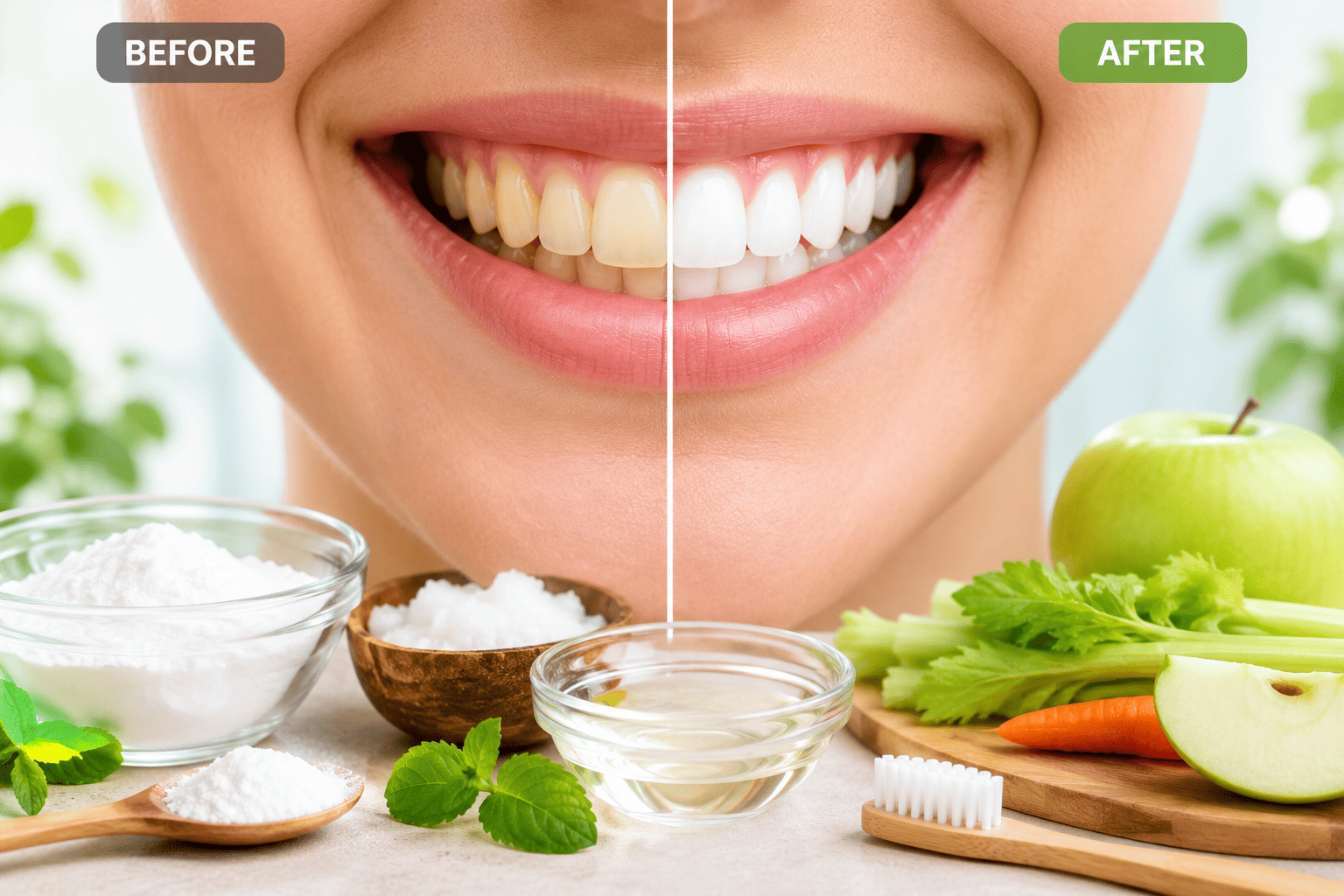
A bright, white smile can boost your confidence and improve your overall appearance. Over time, teeth may become stained due to coffee, tea, red wine, smoking, or certain foods. While professional teeth whitening treatments are available, many people in the United States also look for natural ways to help keep their teeth looking clean and healthy.
Although natural remedies may help remove some surface stains, they do not provide the same results as professional whitening treatments. Combining good oral hygiene with healthy habits is the best way to support a brighter smile.
Table of Contents
ToggleWhat Causes Teeth to Turn Yellow?
Several factors can contribute to tooth discoloration, including:
- Coffee and tea
- Red wine
- Smoking or tobacco use
- Poor oral hygiene
- Aging
- Certain medications
- Foods that stain teeth
Understanding the cause of discoloration can help you choose the best approach for maintaining whiter-looking teeth.
Natural Ways to Whiten Teeth at Home
1. Brush Twice Daily
Brushing your teeth for two minutes twice a day helps remove plaque and surface stains. Use an ADA-accepted fluoride toothpaste and replace your toothbrush every 3–4 months.
2. Practice Oil Pulling
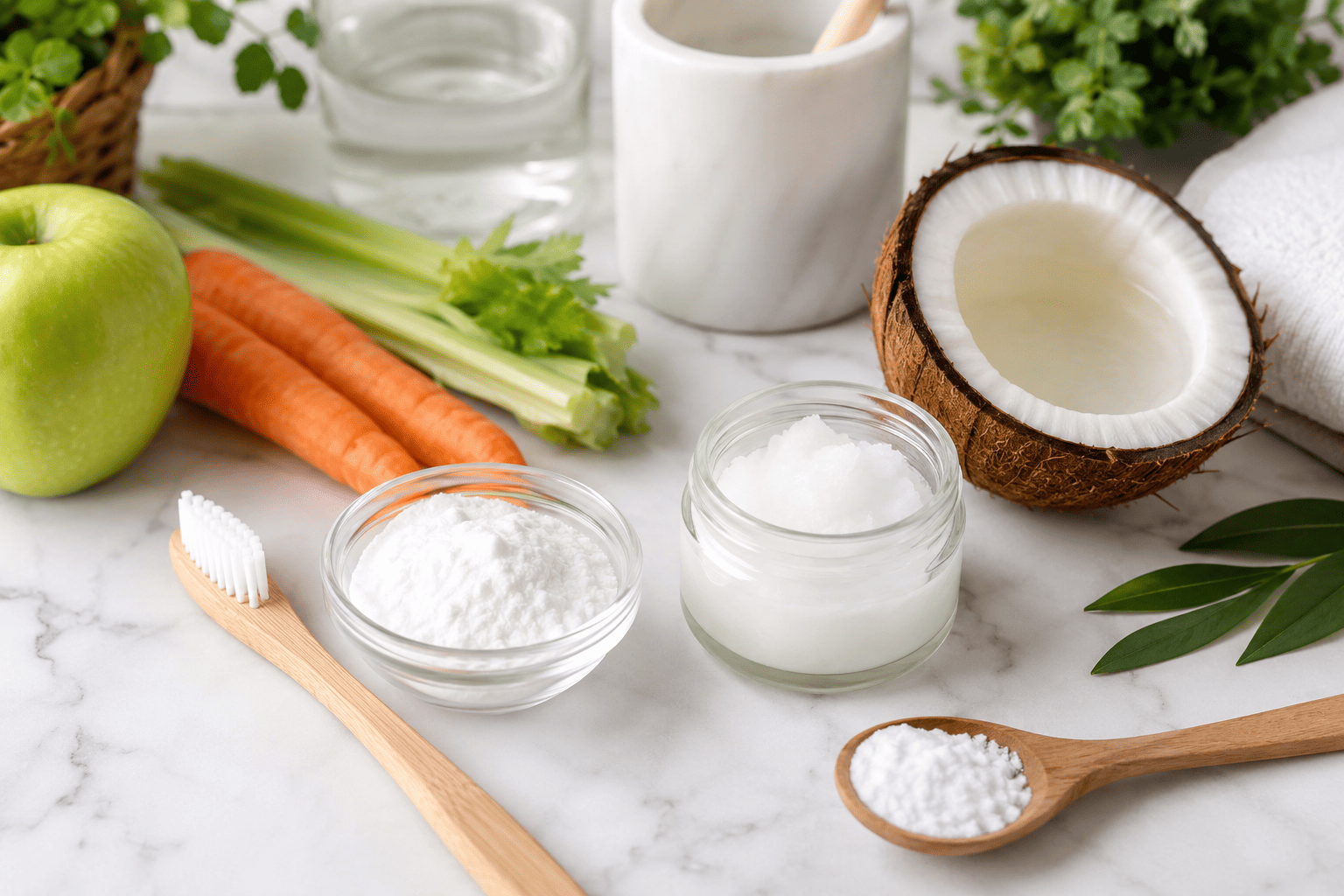
Oil pulling is a traditional practice that involves swishing coconut oil in your mouth for about 10–15 minutes before brushing. While research on whitening is limited, it may help improve overall oral hygiene when used alongside regular brushing and flossing.
3. Baking Soda Toothpaste
Baking soda has mild abrasive properties that may help remove some surface stains from teeth.
How to Use:
- Brush gently with a toothpaste containing baking soda or use a small amount mixed with water once or twice a week.
- Avoid excessive use, as overbrushing can wear down enamel.
4. Eat Crunchy Fruits and Vegetables
Foods such as apples, carrots, and celery may help clean the surface of teeth while stimulating saliva production, which naturally helps rinse away food particles.
5. Stay Hydrated
Drinking water throughout the day helps wash away food debris and staining substances. If available in your area, fluoridated tap water can also help strengthen tooth enamel.
6. Limit Foods and Drinks That Cause Stains
To help keep your teeth looking brighter, reduce consumption of:
- Coffee
- Black tea
- Red wine
- Cola and dark soft drinks
- Berries with strong pigments
If you enjoy these beverages, consider drinking water afterward to help reduce staining.
7. Floss Every Day
Flossing removes plaque and food particles between teeth where a toothbrush cannot reach, supporting a cleaner and healthier smile.
Foods That Support Healthy Teeth
Include these foods in your diet:
- Cheese
- Plain yogurt
- Milk
- Leafy green vegetables
- Almonds
- Apples
- Carrots
- Celery
- Strawberries (in moderation)
These foods provide nutrients such as calcium and phosphorus that support healthy teeth.
Habits to Avoid
Avoid these habits if you want to maintain a brighter smile:
- Smoking or using tobacco products
- Skipping brushing before bed
- Drinking sugary beverages frequently
- Using harsh DIY whitening methods
- Brushing too aggressively
When Should You See a Dentist?
Visit your dentist if you notice:
- Persistent tooth discoloration
- Tooth pain or sensitivity
- Dark spots on teeth
- Broken or chipped teeth
- Signs of gum disease
Professional dental care can help determine the cause of discoloration and recommend appropriate treatment.
Teeth Whitening Tips for People in the United States
Many dentists in the U.S. recommend maintaining a consistent oral hygiene routine and using ADA-accepted fluoride toothpaste for daily care. Regular dental cleanings can help remove plaque and surface stains that brushing alone may not eliminate. If you’re considering whitening products, consult your dentist to choose an option that’s safe and appropriate for your teeth.
Final Thoughts
Natural methods may help reduce surface stains and support a healthier-looking smile, but they are not a replacement for professional teeth whitening treatments. Brushing, flossing, staying hydrated, eating tooth-friendly foods, and visiting your dentist regularly can all contribute to brighter, healthier teeth over time.
Natural methods such as brushing regularly, using baking soda toothpaste occasionally, and maintaining good oral hygiene may help remove some surface stains.
Baking soda may help reduce surface stains when used gently and in moderation, but it does not change the natural color of teeth.
Oil pulling may support oral hygiene, but there is limited scientific evidence that it significantly whitens teeth.
Crunchy fruits and vegetables, dairy products, and water can support oral health and help reduce surface stains.
Most adults should have a dental checkup and professional cleaning every six months, or as recommended by their dentist.