Table of Contents
ToggleYoga for Weight Loss at Home: Simple Yoga Poses for a Healthier Routine
Yoga Exercises for Weight Loss at Home
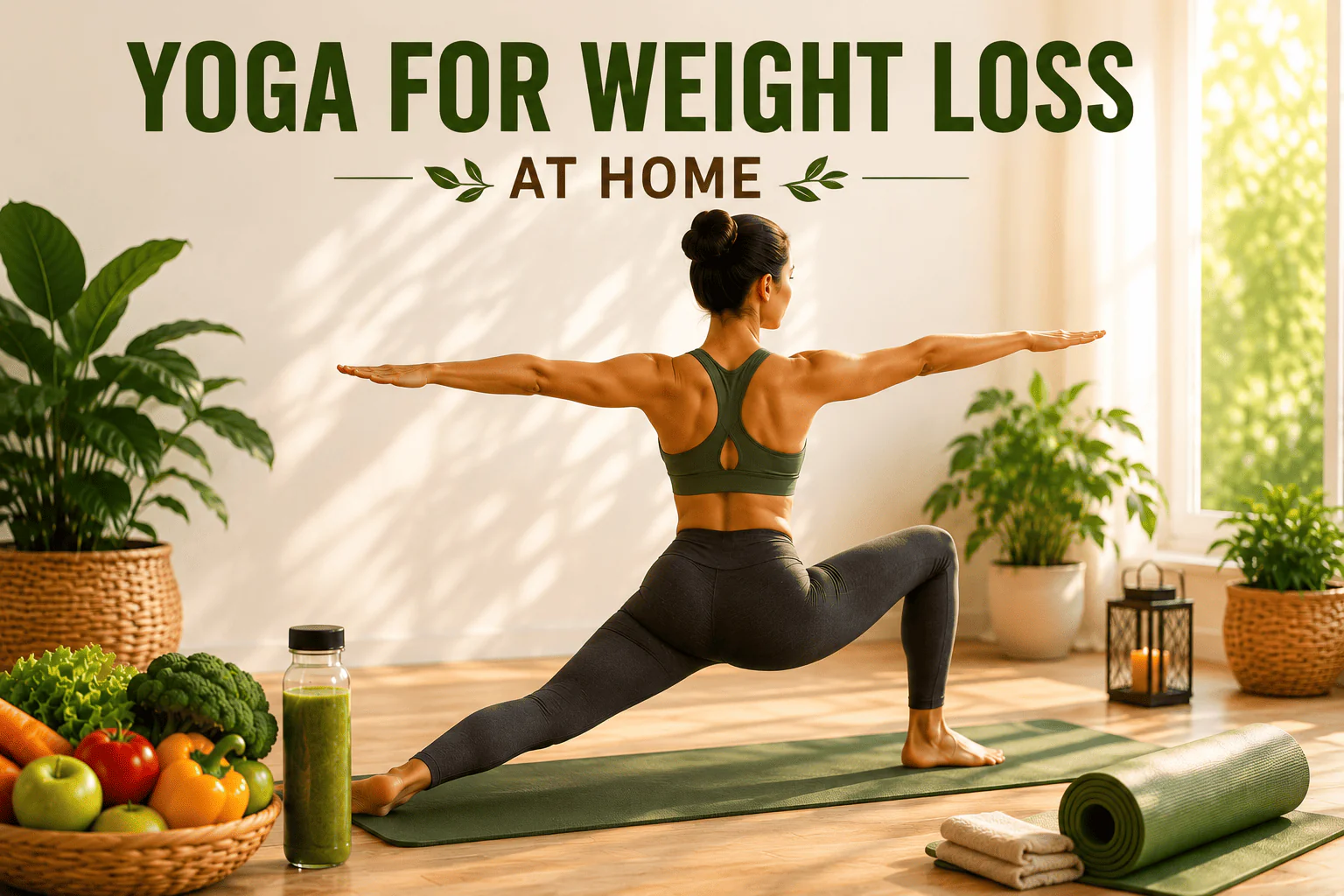
If you want to become more active but don’t enjoy crowded gyms or complicated workout routines, practicing yoga at home can be a simple place to start.
Yoga combines physical movement with breathing and mindfulness. Depending on the type and intensity of practice, it can help improve flexibility, balance, muscle strength, and overall physical fitness. It may also support healthy weight management when combined with nutritious eating and regular daily activity.
However, yoga should not be viewed as a quick way to lose weight. Sustainable weight management usually depends on several factors, including your eating habits, activity level, sleep, stress, and overall health.
The good thing is that you don’t need an expensive setup to begin. A small space, comfortable clothing, and a yoga mat are usually enough for a basic home practice.
In this guide, we’ll look at some beginner-friendly yoga poses for weight loss at home and simple lifestyle habits that can support your goals.
Can Yoga Help With Weight Loss?
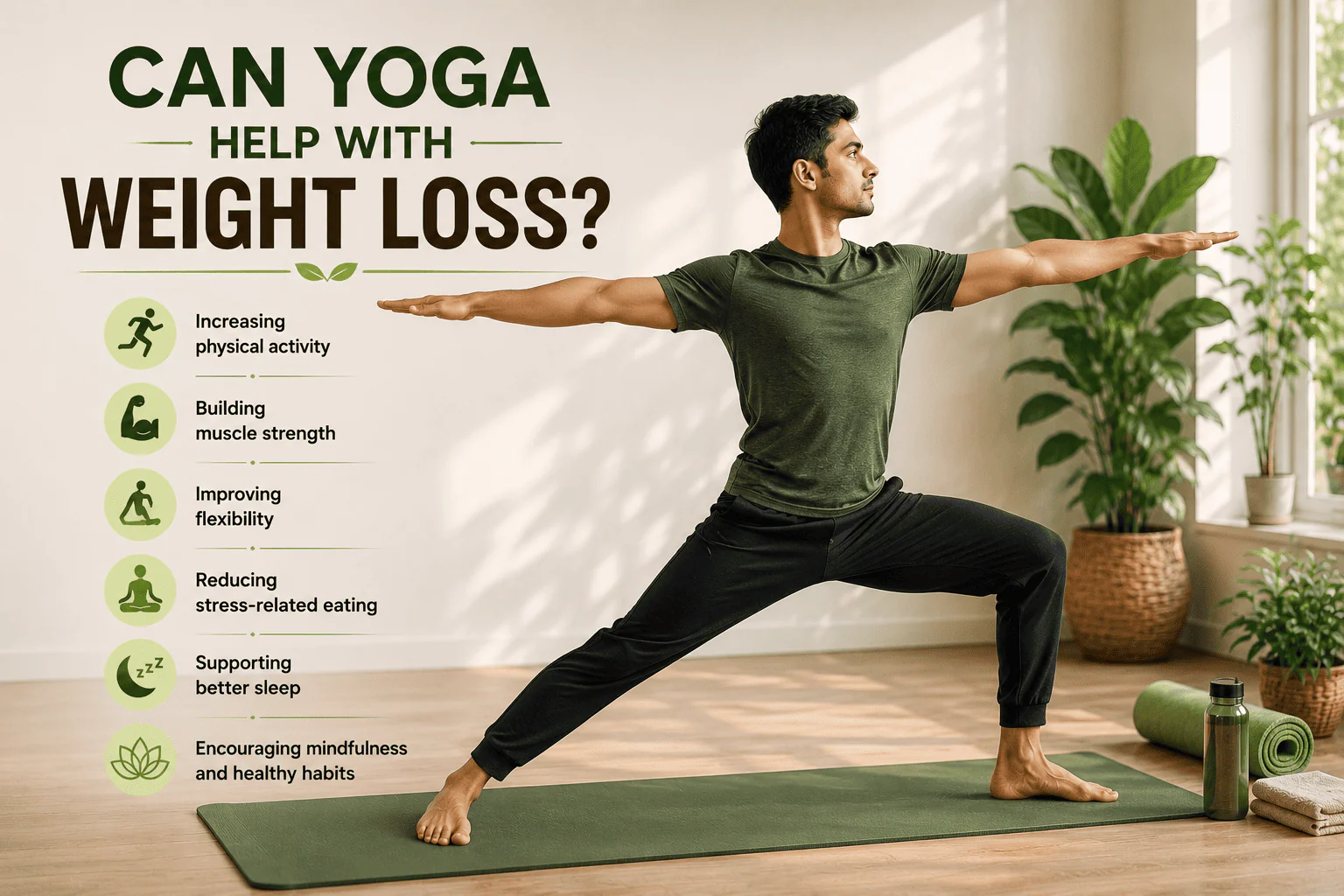
Yoga can be a useful part of a healthy weight-management routine, particularly when it helps you become more physically active and consistent with exercise.
Regular yoga practice may help you:
- Improve muscle strength
- Increase flexibility and mobility
- Improve balance and body awareness
- Support regular physical activity
- Reduce stress
- Encourage mindful eating habits
- Support better sleep and relaxation
- Build a more consistent exercise routine
Some forms of yoga are physically demanding and can raise your heart rate, while gentler styles focus more on stretching, breathing, and relaxation.
For weight management, yoga works best as part of a broader routine that includes a balanced diet and other forms of physical activity such as walking, cycling, or strength training.
How Much Yoga Should You Do at Home?
There is no single routine that works for everyone.
If you’re new to yoga, starting with 10–15 minutes a day can be more realistic than immediately trying to complete a long session.
As you become comfortable with the movements, you can gradually increase the duration.
The most important thing is consistency. Practicing for a short amount of time regularly can be easier to maintain than doing a very long workout only once in a while.
Always choose a level of practice that matches your current fitness and mobility.
Best Yoga Poses for Weight Loss at Home
The following poses can be included in a simple home yoga routine. They work different muscle groups and can help improve strength, balance, flexibility, and body awareness.
1. Surya Namaskar (Sun Salutation)
Surya Namaskar, or Sun Salutation, is a sequence of yoga movements performed together rather than a single pose.
It involves several movements that work the upper and lower body while coordinating movement with breathing.
It can be a useful addition to a morning or home workout routine because it involves continuous movement and can be adjusted according to your fitness level.
How to Practice:
- Begin standing comfortably with your feet together or slightly apart.
- Move through the sequence slowly while coordinating each movement with your breathing.
- Keep your movements controlled rather than rushing.
- Start with a few rounds and gradually increase if comfortable.
Beginners can practice 3–5 rounds initially and increase gradually as they become more comfortable.
2. Warrior Pose (Virabhadrasana)
Warrior Pose is a standing posture that engages the legs and core while also challenging balance and stability.
It can be useful for building strength in the lower body as part of a regular yoga practice.
How to Practice:
- Stand with your feet comfortably apart.
- Step one foot forward and turn the other foot slightly outward.
- Bend your front knee while keeping it aligned with your foot.
- Extend your arms comfortably.
- Keep your torso upright and breathe steadily.
- Hold for around 15–30 seconds, then repeat on the opposite side.
Avoid forcing the knee or hips into a position that feels uncomfortable.
3. Plank Pose
Plank Pose is a simple bodyweight posture that engages the core, shoulders, arms, and legs.
Although it is not a traditional calorie-burning exercise by itself, it can help develop strength and body control.
How to Practice:
- Begin on your hands and knees.
- Place your hands underneath or slightly ahead of your shoulders.
- Step your feet back one at a time.
- Keep your body in a comfortable straight line.
- Engage your abdominal muscles.
- Hold for 10–30 seconds to begin.
If a full plank is difficult, you can practice with your knees supported on the floor.
4. Boat Pose (Navasana)
Boat Pose is a seated posture that challenges the abdominal and hip muscles while requiring balance and core control.
It can be difficult for beginners, so there is no need to hold the position for a long time.
How to Practice:
- Sit on the floor with your knees bent.
- Keep your spine comfortably upright.
- Lean back slightly while keeping your chest open.
- Lift your feet from the floor if comfortable.
- Extend your arms forward.
- Hold the position for 10–20 seconds and gradually build up.
You can keep your knees bent instead of straightening your legs.
5. Bridge Pose (Setu Bandhasana)
Bridge Pose is performed lying on your back and can help strengthen the hips, glutes, and legs while gently opening the front of the body.
How to Practice:
- Lie on your back.
- Bend your knees and place your feet flat on the floor.
- Keep your feet approximately hip-width apart.
- Place your arms beside your body.
- Press your feet gently into the floor.
- Lift your hips comfortably.
- Hold for 15–30 seconds while breathing normally.
- Slowly lower your hips back down.
Avoid pushing your body higher than feels comfortable.
6. Cobra Pose (Bhujangasana)
Cobra Pose is a gentle backbend that can help improve spinal mobility and strengthen the muscles of the back when practiced with proper form.
How to Practice:
- Lie on your stomach.
- Place your palms near your chest.
- Keep your elbows close to your body.
- Gently lift your chest while keeping your lower body relaxed.
- Avoid pushing yourself too high.
- Hold for several breaths.
- Slowly return to the starting position.
If you experience lower-back discomfort, stop and choose a more suitable movement.
A Simple Yoga Routine for Beginners
If you’re just starting, you don’t need to perform every pose for a long time.
A simple routine could look like this:
Exercise | Suggested Time |
Gentle warm-up | 2–3 minutes |
Surya Namaskar | 3–5 rounds |
Warrior Pose | 15–30 seconds per side |
Plank Pose | 10–30 seconds |
Boat Pose | 10–20 seconds |
Bridge Pose | 15–30 seconds |
Cobra Pose | Several comfortable breaths |
Relaxation | 2–3 minutes |
This is only a general example. Adjust the duration and intensity according to your fitness level.
Healthy Habits That Support Weight Management
Yoga can be helpful, but your everyday habits matter too.
Eat More Whole and Nutrient-Rich Foods
Build your meals around foods such as:
- Vegetables
- Fruits
- Whole grains
- Beans and lentils
- Protein-rich foods
- Nuts and seeds
- Healthy sources of fat
A varied diet can provide the nutrients your body needs while helping you develop healthier eating habits.
Pay Attention to Portions
Even nutritious foods can contribute to excess calorie intake when portions are consistently very large.
Eating slowly and paying attention to hunger and fullness can help you become more aware of your eating habits.
Stay Active Outside Your Yoga Sessions
You don’t need to limit physical activity to your yoga mat.
Walking, household activities, cycling, dancing, taking the stairs, or other enjoyable forms of movement can help increase your daily activity.
Drink Enough Water
Staying hydrated is important for overall health.
Choosing water instead of sugary beverages can also reduce unnecessary calorie intake.
Get Enough Sleep
Sleep is an often-overlooked part of healthy weight management.
Try to maintain a consistent sleep schedule and give your body enough time to rest and recover.
Manage Stress
Stress can affect eating habits, sleep, and motivation to exercise.
Breathing exercises, meditation, walking, hobbies, relaxation, and regular physical activity may help you develop healthier ways of managing everyday stress.
Common Mistakes to Avoid
Starting a new exercise routine can be exciting, but avoid expecting dramatic changes immediately.
Expecting Fast Weight Loss
Yoga is not a quick-fix solution for losing weight.
Changes in body weight usually take time and can vary considerably between individuals.
Practicing Without a Warm-Up
If you’re doing a more active yoga session, spend a few minutes gently warming up your body first.
Forcing Your Body Into a Pose
Flexibility develops gradually.
Never force a stretch or try to copy an advanced pose if your body is not ready for it.
Ignoring Proper Breathing
Breathing is an important part of yoga.
Try to breathe naturally and avoid holding your breath during challenging positions.
Practicing Inconsistently
Doing yoga once every few weeks is unlikely to become a meaningful fitness habit.
Choose a routine that fits realistically into your schedule.
Depending Only on Yoga for Weight Loss
Yoga can contribute to an active lifestyle, but combining it with balanced nutrition and other physical activities may provide a more complete approach to weight management.
Safety Tips for Practicing Yoga at Home
Yoga is generally accessible to many people, but it is still important to practice safely.
- Start with beginner-friendly movements.
- Practice on a stable, non-slip surface.
- Avoid forcing your joints or muscles.
- Move slowly when entering and leaving poses.
- Stop if you experience sharp pain, dizziness, or unusual discomfort.
- Use modifications when necessary.
- If you have an injury or medical condition, ask a qualified healthcare professional or appropriately trained yoga professional which movements are suitable for you.
If you are pregnant, recovering from an injury, or have a health condition that affects movement, get appropriate professional guidance before starting a new exercise routine.
How Long Does It Take to See Results From Yoga?
There is no fixed timeline for seeing changes from yoga.
Your results can depend on factors such as:
- How often you practice
- Your overall diet
- Your other physical activities
- Starting fitness level
- Sleep
- Stress
- Age
- Individual health factors
You may notice improvements in flexibility, balance, strength, or how you feel before seeing a noticeable change in your body weight.
Instead of focusing only on the weighing scale, look at the bigger picture and aim for gradual improvements in your overall fitness and lifestyle.
Final Thoughts
Yoga for weight loss at home can be a simple and accessible way to become more active without needing a gym or expensive equipment.
Poses such as Surya Namaskar, Warrior Pose, Plank, Boat Pose, Bridge Pose, and Cobra Pose can be included in a beginner-friendly routine to work on strength, flexibility, balance, and body awareness.
However, yoga should not be treated as a magic solution for losing weight.
For sustainable weight management, focus on the bigger picture: eat nutritious meals, stay active throughout the day, practice yoga consistently, drink enough water, get adequate sleep, and manage stress.
Start with a routine that feels realistic for your current fitness level. Over time, small and consistent changes can become lasting healthy habits.
Frequently Asked Questions (FAQs)
Yes, yoga can be part of a healthy weight-management routine at home. It can improve strength, flexibility, balance, and physical activity levels. For better results, combine yoga with balanced nutrition and regular movement.
There is no single yoga style that is best for everyone.
More physically active styles may provide a higher level of movement, while gentler practices can support flexibility, relaxation, and stress management.
Choose a form that matches your fitness level and that you can practice consistently.
Yoga can contribute to weight management, but relying on yoga alone may not be enough for everyone.
A combination of nutritious eating, regular physical activity, adequate sleep, and stress management is generally a more practical approach.
There is no universal number of minutes required specifically for weight loss.
Beginners can start with around 10–15 minutes and gradually increase their practice as their fitness improves.
Yes. Beginners can start with simple poses such as Warrior Pose, Bridge Pose, gentle Sun Salutations, modified Plank, and other beginner-friendly movements.
Start slowly and focus on proper technique rather than trying to perform advanced poses.
About the Author
HealthCureRemedies Editorial Team
The HealthCureRemedies Editorial Team shares easy-to-understand information on wellness, nutrition, personal care, and healthy lifestyle habits. Our goal is to help readers make informed decisions by presenting practical health and hygiene information.
Editorial Approach
Our content is researched using relevant and publicly available health information and presented in a clear, reader-friendly format.
We aim to provide practical wellness information while avoiding exaggerated claims or promises of guaranteed results.
Health-related information is reviewed for clarity and responsible communication before publication.
Important Note
HealthCureRemedies provides general educational information and does not provide individual medical diagnosis or treatment.
Exercise and yoga practices may not be suitable for everyone. Readers with injuries, medical conditions, persistent symptoms, or other health concerns should consult a qualified healthcare professional before starting a new exercise routine.