Table of Contents
ToggleHow to Reduce Hair Fall After Pregnancy Naturally
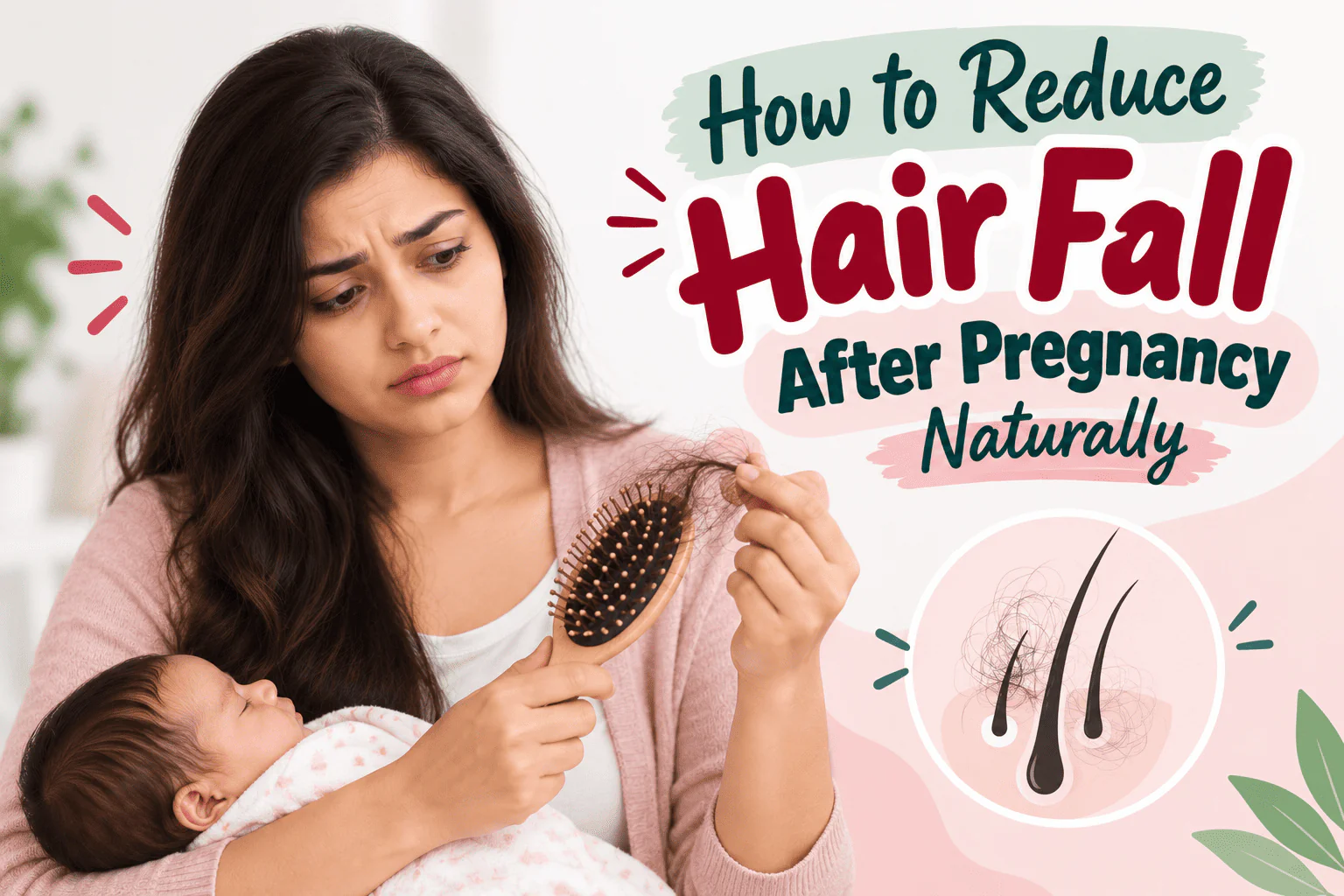
Experiencing increased hair shedding after childbirth is common among new mothers. Many women notice that their hair becomes thinner or loses some of its fullness during the months following delivery. This change is often linked to hormonal fluctuations that affect the normal hair-growth cycle.
During pregnancy, hormonal changes can keep more hair in its growing phase. After delivery, hormone levels shift, and the hair that remained in that phase may begin shedding together. This temporary condition is known as postpartum hair loss, also called telogen effluvium.
Although postpartum hair fall can be frustrating, it generally improves with time. A nutritious diet, gentle hair-care practices, and healthy daily habits can help you care for your hair while your body recovers.
What Causes Hair Fall After Pregnancy?
Postpartum hair shedding is mainly associated with hormonal changes that occur after childbirth. During pregnancy, increased estrogen levels can keep more hair in the active growth phase. Following delivery, estrogen levels decrease, and these hairs may enter the resting phase before shedding.
This can make hair fall appear more noticeable than usual, particularly a few months after childbirth.
Other factors may also contribute to hair shedding during the postpartum period, such as:
- Not getting enough essential nutrients
- Insufficient sleep
- Physical or emotional stress
- Significant weight changes
- Iron deficiency or anemia
- Thyroid-related concerns
- A diet that does not provide enough protein
For many women, postpartum hair shedding gradually settles as the hair-growth cycle returns to its usual pattern. Hair fullness may take several months to recover.
How to Reduce Hair Fall After Pregnancy Naturally
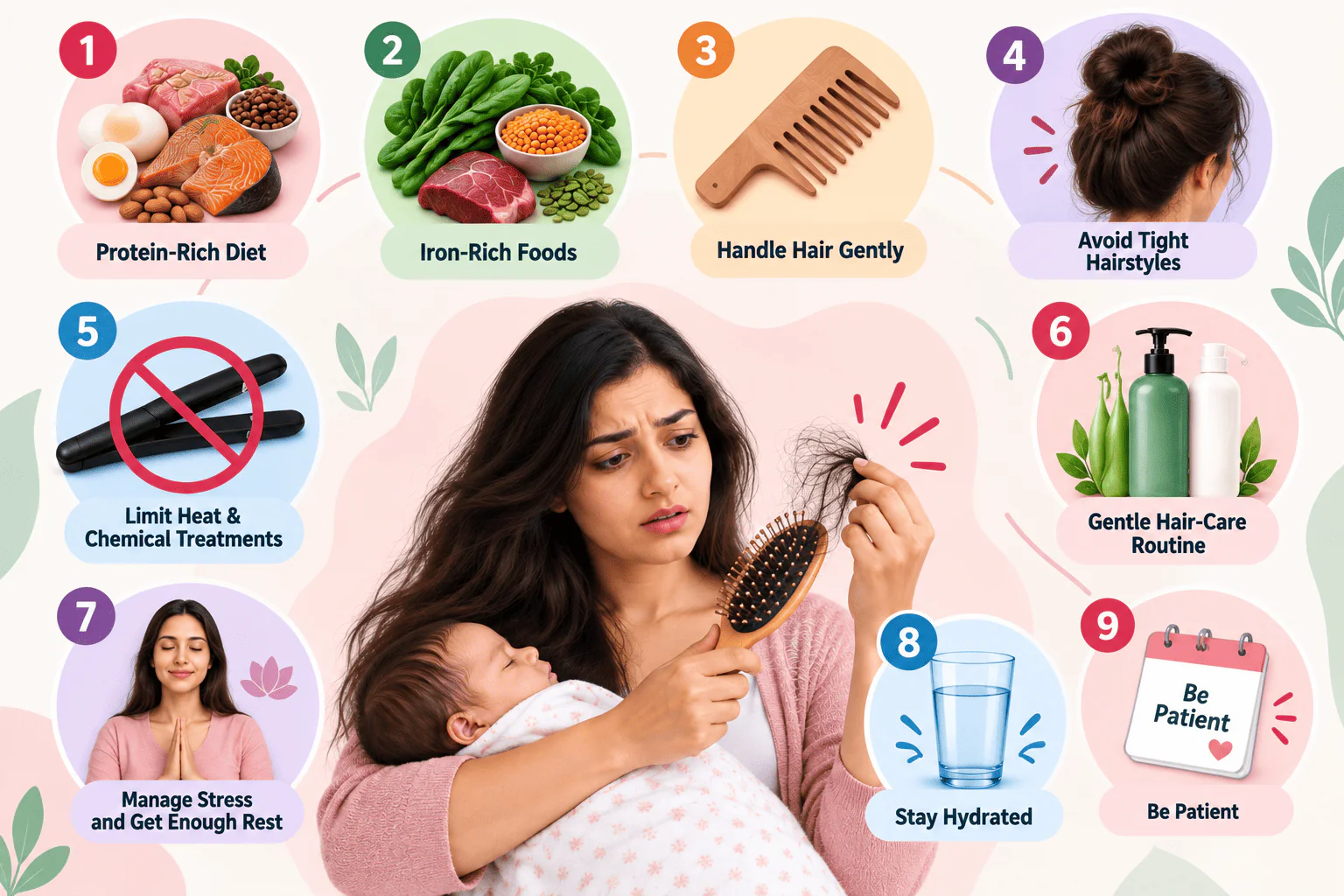
1. Include Protein in Your Daily Meals
Protein is an important part of a balanced diet and supports the normal growth and maintenance of hair. Since hair contains a protein called keratin, consistently eating enough protein can help support healthy hair.
Consider including foods such as eggs, fish, chicken, lentils, beans, yogurt, paneer, nuts, and seeds in your meals.
Along with protein, your body needs a variety of nutrients for overall recovery after childbirth. If you think your diet may be lacking in certain nutrients, speak with a healthcare professional before taking supplements.
2. Add Iron-Rich Foods to Your Diet
Iron helps the body carry oxygen through the blood, and low iron levels can be associated with increased hair shedding. Paying attention to iron intake may be helpful during postpartum recovery.
Some foods that contain iron include:
- Spinach and other leafy vegetables
- Lentils, chickpeas, and beans
- Eggs
- Lean meat
- Pumpkin seeds
- Iron-fortified cereals
If you are concerned about low iron levels, ask your healthcare provider whether testing is appropriate. Avoid taking high-dose iron supplements without professional guidance.
3. Avoid Rough Hair Handling
Hair can become more vulnerable to breakage when it is handled roughly. Gentle grooming can help reduce unnecessary pulling and damage while you are experiencing postpartum shedding.
For a gentler routine:
- Detangle your hair slowly with a wide-tooth comb.
- Avoid forcefully brushing knots.
- Pat your hair dry instead of rubbing it vigorously with a towel.
- Use a low or moderate heat setting when drying.
- Take extra care when combing wet hair.
These steps will not stop hormonally related shedding, but they can help reduce avoidable hair breakage.
4. Choose Loose and Comfortable Hairstyles
Hairstyles that pull tightly on the roots can place repeated tension on the hair. Tight ponytails, buns, and braids may contribute to breakage or traction-related hair loss.
Try wearing your hair loosely and avoid styles that cause discomfort or pulling around the hairline. Gentle hairstyles can help minimize additional stress on your hair.
5. Reduce Heat Styling and Chemical Treatments
Frequent use of heated styling tools and chemical treatments can weaken the hair shaft and increase the risk of breakage. Straighteners, curling irons, very hot blow dryers, bleaching, and similar treatments may be especially harsh when used regularly.
Consider reducing intensive styling while your hair is shedding. When you do use heat, choose a lower temperature and avoid repeated passes over the same section of hair.
6. Follow a Mild Hair-Care Routine
A simple hair-care routine can help keep your scalp comfortable and reduce unnecessary damage. Use a shampoo and conditioner that suit your hair type, and avoid products that cause irritation or excessive dryness.
Conditioner can help soften the hair and reduce friction during detangling. If your hair looks temporarily thinner, a volumizing shampoo may make it appear fuller, although it does not treat the underlying cause of postpartum shedding.
7. Make Time for Rest and Stress Management
The postpartum period can involve major physical, emotional, and lifestyle changes. Caring for a newborn may also make it difficult to get consistent sleep or time for yourself.
Whenever possible, take short rest breaks, ask trusted family members for help, and make time for relaxing activities. These habits can support your general well-being while you adjust to your new routine.
8. Drink Enough Water
Staying hydrated is an important part of overall health and recovery after childbirth. Keep water nearby and drink regularly throughout the day, especially when you are busy caring for your baby.
Water supports normal body functions, but drinking extra water alone is not a proven treatment for postpartum hair loss.
9. Allow Time for Natural Hair Recovery
Postpartum hair shedding is usually connected to changes in the hair-growth cycle, so it cannot always be stopped immediately with a home remedy. In many cases, shedding gradually decreases as the cycle returns to its usual pattern.
Rather than trying several intensive treatments at once, focus on balanced nutrition, gentle grooming, and overall recovery. Give your hair time to regain its usual fullness.
Can Natural Oils Help With Postpartum Hair Fall?
Traditional hair oils, such as coconut oil and almond oil, may help condition the hair and reduce dryness or friction. They can make hair feel softer, but they are not established treatments for the hormonal changes responsible for postpartum hair shedding.
If you prefer oiling your hair, apply a small amount and massage gently without pulling or scratching the scalp.
Use extra caution with concentrated essential oils and herbal supplements, particularly if you are breastfeeding. Not all products have been adequately studied for use during breastfeeding. Check with your healthcare provider before starting a new supplement or treatment.
When Should You Consult a Doctor?
Hair shedding after pregnancy is often temporary, but persistent or unusually severe hair loss may need medical evaluation. Other conditions can also contribute to hair thinning, so it is important not to assume that every case is caused by postpartum hormonal changes.
Speak with a healthcare professional if you notice:
- Hair shedding that continues longer than expected
- Distinct bald patches
- Scalp itching, pain, redness, or inflammation
- Hair thinning that keeps progressing
- Symptoms that may be associated with anemia or thyroid problems
Your healthcare provider can assess your symptoms and determine whether further evaluation or treatment is needed.
Final Thoughts
Postpartum hair fall can be an unexpected part of recovery after childbirth. Hormonal changes commonly affect the hair-growth cycle, leading to temporary shedding that often improves over time.
You can support your hair during this period by eating a varied diet with adequate protein and iron, handling your hair gently, avoiding tight hairstyles, and limiting excessive heat or chemical treatments. Rest and patience are also important as your body adjusts after pregnancy.
If hair loss is severe, continues for longer than expected, or occurs alongside other symptoms, consult a healthcare professional to check for possible underlying causes.
Disclaimer: This article is intended for general educational purposes only and is not a substitute for professional medical advice, diagnosis, or treatment. If you are breastfeeding, taking medication, or considering supplements for hair loss, consult your healthcare provider before beginning a new treatment.
Frequently Asked Questions (FAQs)
Postpartum hair shedding is generally temporary. Many women notice that it gradually improves over several months, while hair fullness may take around 6–12 months after childbirth to return toward its usual level.
You can support your hair during postpartum recovery by eating a balanced diet, including enough protein and iron, handling your hair gently, avoiding tight hairstyles, and limiting excessive heat styling. These habits support hair care, although they cannot immediately stop hormone-related shedding.
Hair oils such as coconut oil and almond oil may help condition dry hair and reduce friction. However, they are not proven to prevent or treat the hormonal cause of postpartum hair shedding. Apply gently and avoid vigorous scalp massage.
Include a variety of protein-rich and iron-containing foods, such as eggs, fish, chicken, lentils, beans, leafy vegetables, yogurt, paneer, nuts, seeds, and fortified cereals. If you suspect a nutritional deficiency, consult your healthcare provider before using supplements.
Seek medical advice if hair loss is unusually severe, continues longer than expected, causes bald patches, or is accompanied by scalp discomfort or inflammation. Ongoing thinning or symptoms that may suggest anemia or thyroid problems should also be evaluated.
About the Author
HealthCureRemedies Editorial Team
The HealthCureRemedies Editorial Team creates accessible educational content about wellness, nutrition, personal care, and healthy lifestyle practices. Our aim is to help readers understand everyday health topics and make informed choices.
Editorial Approach
Our articles focus on practical, general health information and responsible wellness guidance. We encourage readers to consult qualified healthcare professionals for individual concerns, symptoms, or treatment decisions
Important Note
The information provided in this article is for general educational purposes only. It should not be considered a replacement for professional medical advice, diagnosis, or treatment. For personalised guidance about postpartum hair loss, nutritional deficiencies, or supplements, consult a qualified healthcare professional.