Table of Contents
ToggleNatural Home Remedies for Bad Breath
Bad breath, or halitosis, is common and can occur after eating certain foods or when oral hygiene is not adequate. Persistent bad breath, however, may sometimes be linked to gum problems, tooth decay, dry mouth, or another underlying issue.Simple daily habits can help improve oral hygiene and reduce many common causes of unpleasant breath.
What Causes Bad Breath?
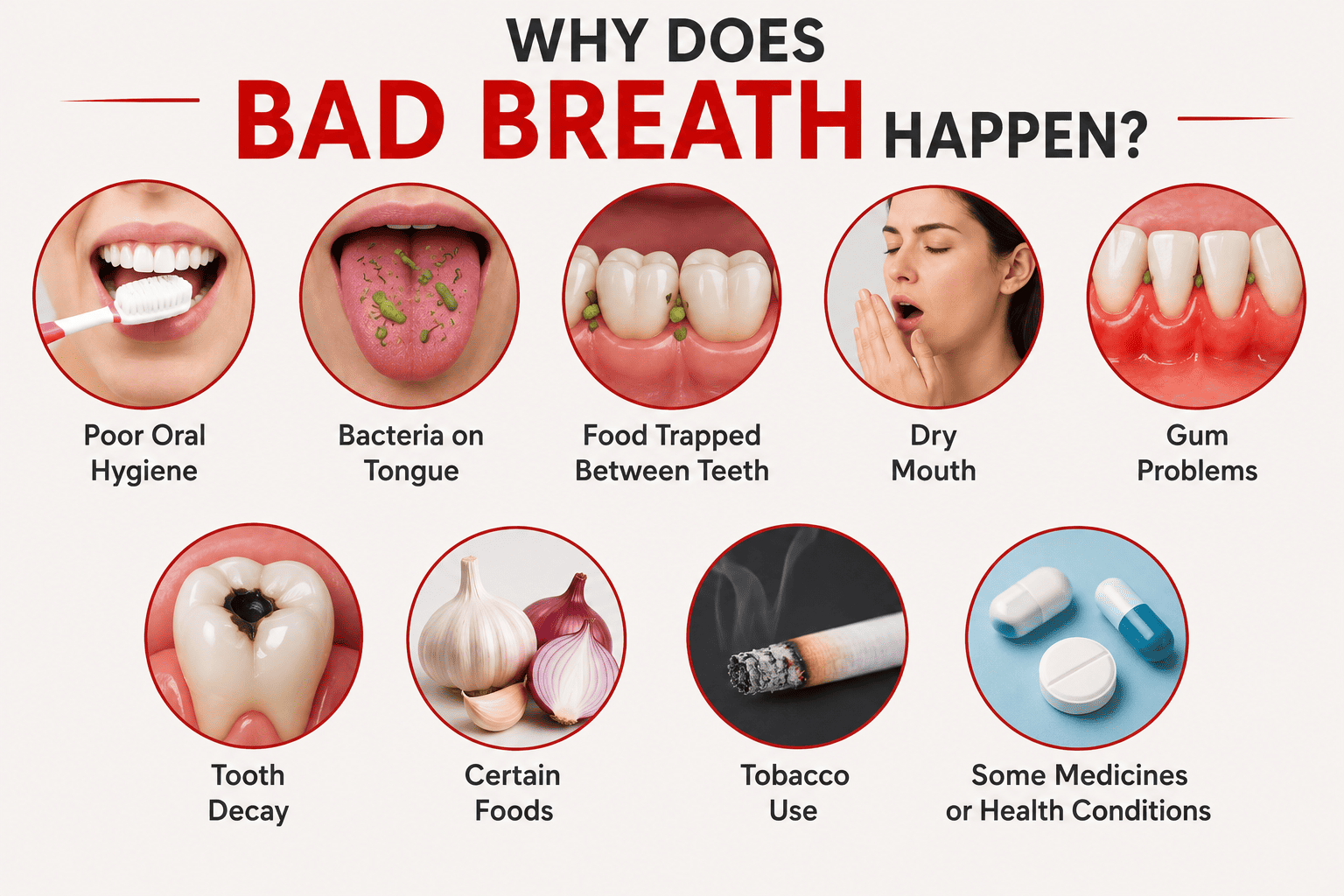
- Poor oral hygiene
- Bacteria on the tongue
- Food trapped between teeth
- Dry mouth
- Gum problems
- Tooth decay
- Certain foods
- Tobacco use
- Some medicines or health conditions
1. Drink Plenty of Water
Staying hydrated supports saliva production and can help reduce dry mouth. Water can also help wash away food particles.
2. Clean Your Tongue
The tongue can collect bacteria and food debris. Gently clean it with a tongue scraper or toothbrush without pressing too hard.
3. Brush Twice Daily
Brush for around two minutes twice a day with fluoride toothpaste. Clean along the gumline as well.
4. Clean Between Your Teeth
Floss or use an interdental cleaner to remove food and plaque from between the teeth, where a toothbrush may not reach.
5. Choose Fresh, Balanced Foods
Fresh fruits and vegetables can be part of a balanced diet and may encourage chewing and saliva flow. They do not replace brushing and interdental cleaning.
6. Limit Foods That Trigger Temporary Odor
Garlic, onions, certain spices, and alcohol can cause temporary changes in breath odor. Reducing or timing these foods may help.
7. Avoid Tobacco
Avoiding tobacco supports oral health and can help reduce tobacco-related bad breath.
8. Maintain a Balanced Diet
Include a variety of vegetables, fruits, whole grains, protein sources, and adequate water while limiting frequent sugary foods and drinks.
Can Mouthwash Replace Brushing?
No. Mouthwash may be useful for some people, but it should complement—not replace—brushing and cleaning between teeth. Ask a dentist whether a particular mouthwash is suitable for you.
When Should You See a Dentist?
Persistent bad breath can sometimes be associated with gum disease, tooth decay, infection, dry mouth, or dental appliances. If it continues despite good oral hygiene, arrange a dental examination.
Daily Habits to Prevent Bad Breath
Brush twice daily, clean your tongue, clean between teeth daily, drink enough water, limit sugary foods and drinks, avoid tobacco, and maintain regular dental checkups.
Final Thoughts
Occasional bad breath is common, but persistent odor should not be ignored. Improving oral hygiene and staying hydrated may help, while a dentist can identify underlying dental causes when the problem continues.
Frequently Asked Questions (FAQs)
Drinking water, cleaning the tongue, brushing twice daily, and cleaning between the teeth can help reduce common causes of bad breath.
Yes. Staying hydrated can help prevent dry mouth and support normal saliva flow.
Maintain good oral hygiene, clean your tongue, clean between your teeth, drink enough water, limit trigger foods, and avoid tobacco.
Persistent odor may be related to tongue bacteria, gum problems, tooth decay, dry mouth, or other factors. A dental examination can help identify the cause.
If bad breath continues despite regular brushing, tongue cleaning, and interdental cleaning, consult a dentist.