Table of Contents
ToggleBest Foods for Eye Health: 7 Foods for Healthy Vision
Best Foods for Eye Health
Our eyes help us read, work, drive, and experience the world around us. With screen use and busy routines becoming part of everyday life, maintaining eye health is an important part of overall wellness.
A balanced diet that includes essential vitamins, minerals, healthy fats, and antioxidants can help support normal eye function. Foods such as carrots, leafy greens, eggs, fatty fish, citrus fruits, nuts, and sweet potatoes provide nutrients that contribute to eye health.
Why Is Nutrition Important for Eye Health?
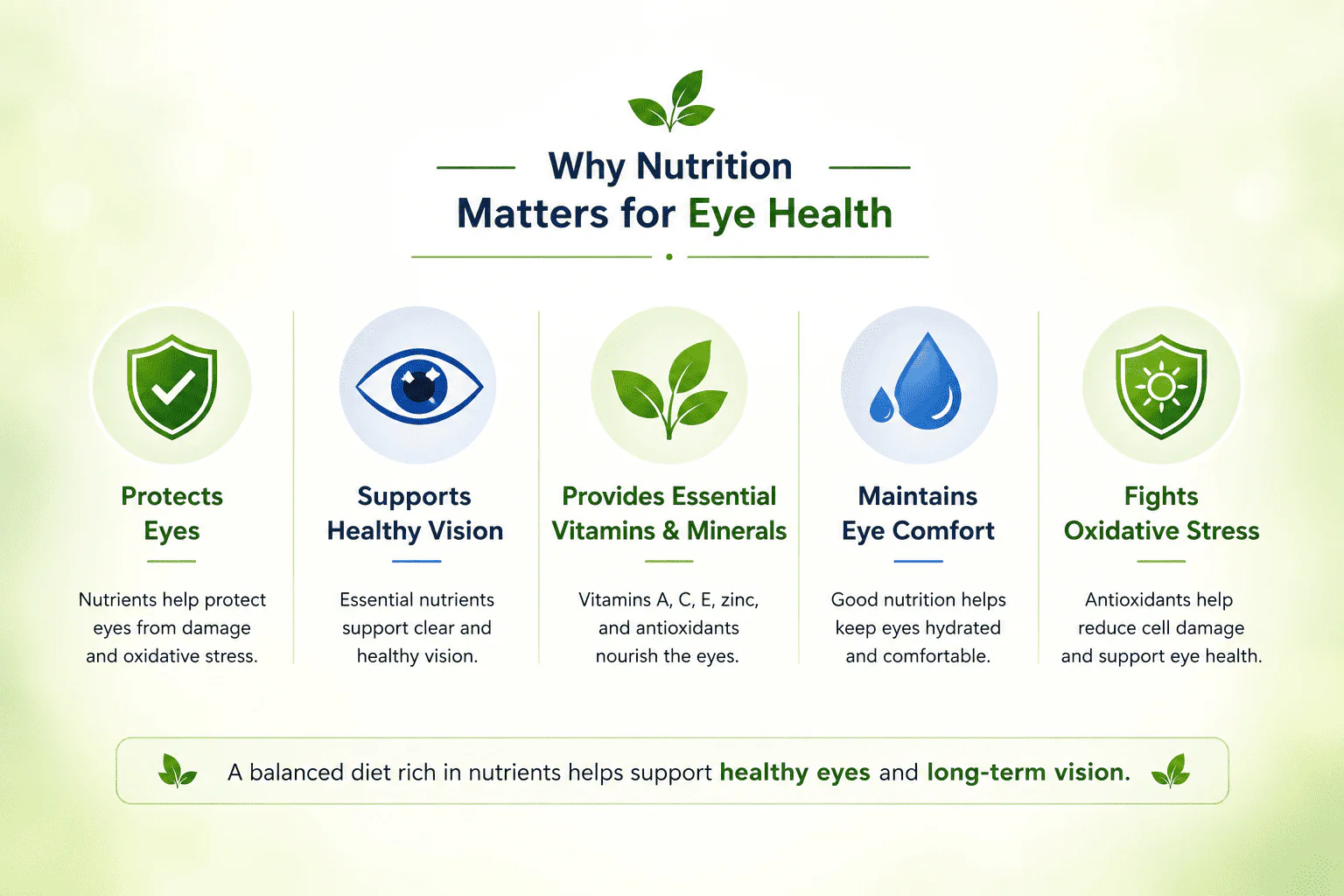
The eyes need a range of nutrients to function normally. Vitamins A, C, and E, along with zinc, omega-3 fatty acids, lutein, and zeaxanthin, play roles in supporting eye health and protecting cells from oxidative stress.
Including a variety of nutrient-rich foods in your daily meals can help support long-term eye wellness. However, food alone cannot guarantee improved eyesight or correct an existing vision problem.
1. Carrots
Carrots are widely associated with eye health because they contain beta-carotene, which the body converts into vitamin A. Vitamin A helps maintain normal vision and supports the healthy functioning of the retina.
You can include carrots in salads, soups, vegetable dishes, or as part of a balanced meal.
2. Spinach and Kale
Spinach, kale, and other leafy green vegetables provide lutein and zeaxanthin. These antioxidants are found in the eye and help protect against oxidative stress and potentially harmful light exposure.
Adding leafy greens to meals regularly is a simple way to increase your intake of these beneficial nutrients.
3. Eggs
Eggs contain several nutrients associated with eye health, including vitamin A, zinc, lutein, and zeaxanthin. These nutrients support normal visual function and help maintain the health of eye tissues.
Enjoy eggs boiled, scrambled, or incorporated into balanced meals according to your dietary preferences.
4. Salmon and Other Fatty Fish
Fatty fish such as salmon, sardines, and mackerel are sources of omega-3 fatty acids. These healthy fats support retinal function and may help with symptoms of dry eyes in some people.
If you do not eat fish, plant-based sources of omega-3 fats, such as walnuts and flaxseeds, can be included in your diet.
5. Citrus Fruits
Oranges, lemons, grapefruits, and other citrus fruits provide vitamin C, an antioxidant that supports healthy blood vessels and helps protect cells from oxidative damage.
Enjoy whole fruits as snacks or include them in meals. Whole fruit is generally preferable to sugary fruit drinks.
6. Almonds and Other Nuts
Almonds, walnuts, and other nuts provide vitamin E, which helps protect cells from oxidative stress. A small portion of nuts can be a convenient addition to a balanced diet.
Choose plain or lightly salted varieties when possible, and consider your individual dietary needs.
7. Sweet Potatoes
Sweet potatoes contain beta-carotene, which the body can convert into vitamin A. This nutrient supports normal vision and healthy eye function.
Sweet potatoes can be baked, boiled, or added to soups and vegetable dishes.
Foods to Limit for Better Eye Health
Along with eating a variety of nutrient-rich foods, consider limiting foods and drinks that are high in added sugar or heavily processed.
Try to reduce your intake of:
- Excessively sugary foods
- Highly processed snacks
- Deep-fried foods
- Sugar-sweetened beverages
These choices are part of an overall balanced eating pattern and should not be viewed as a direct treatment for eye conditions.
Simple Daily Tips for Healthy Eyes
Nutrition is one part of maintaining eye health. Everyday habits can also support your eyes and general well-being.
- Follow the 20-20-20 rule: During screen use, every 20 minutes, look at something about 20 feet away for at least 20 seconds.
- Stay hydrated: Drink water regularly throughout the day.
- Wear UV-protective sunglasses: Protect your eyes from ultraviolet light when outdoors.
- Schedule regular eye examinations: An eye-care professional can check your vision and identify concerns that may not be obvious.
- Get enough sleep: Adequate rest supports general health and eye comfort.
Which Nutrients Are Important for Eye Health?
| Nutrient | Food Sources |
|---|---|
| Vitamin A | Carrots, sweet potatoes, eggs |
| Vitamin C | Citrus fruits |
| Vitamin E | Almonds, nuts |
| Zinc | Eggs, nuts, seafood |
| Omega-3 | Salmon, sardines, walnuts, flaxseeds |
| Lutein | Spinach, kale, leafy greens |
| Zeaxanthin | Eggs, leafy greens |
Final Thoughts
Supporting eye health starts with a balanced diet and consistent daily habits. Carrots, leafy greens, eggs, fatty fish, citrus fruits, nuts, and sweet potatoes provide nutrients that contribute to normal eye function.
Combine a varied diet with healthy screen habits, hydration, UV protection, adequate sleep, and regular eye examinations. If you notice changes in your vision or ongoing eye discomfort, consult a qualified eye-care professional.
Leafy green vegetables, carrots, eggs, fatty fish, citrus fruits, nuts, and sweet potatoes provide nutrients that support normal eye function. Including a variety of these foods in a balanced diet can help support overall eye health.
A nutritious diet supports eye health, but it cannot guarantee sharper eyesight or correct vision problems such as refractive errors. If you experience blurred vision or other changes, consult an eye-care professional.
Vitamin A is essential for normal vision and healthy eye function. Other nutrients, including vitamins C and E, zinc, omega-3 fatty acids, lutein, and zeaxanthin, also contribute to eye health.
Carrots contain beta-carotene, which the body converts into vitamin A. Vitamin A supports normal vision, but eating carrots does not automatically improve eyesight beyond what your body needs.
Foods containing omega-3 fatty acids, such as salmon, sardines, walnuts, and flaxseeds, may support eye comfort for some people. Persistent or uncomfortable dry eyes should be discussed with an eye-care professional.
About the Author
HealthCureRemedies Editorial Team
The HealthCureRemedies Editorial Team shares easy-to-understand information on wellness, nutrition, personal care, and healthy lifestyle habits. Our goal is to help readers make informed decisions by presenting practical health information.
Editorial Approach
Our content focuses on general educational information and everyday wellness practices. We encourage readers to follow established healthcare guidance and consult qualified professionals when they have specific health concerns.
Important Note
This article is intended for general informational purposes only. It is not a substitute for professional medical advice, diagnosis, or treatment. Consult a qualified eye-care professional for personalised guidance about your vision or eye health.