
Table of Contents
ToggleDry Eyes Treatment at Home
Dry eyes are a common problem that can cause discomfort, irritation, redness, and blurry vision. Long hours of screen time, air conditioning, aging, and environmental factors can reduce natural tear production and lead to dry eyes. Fortunately, some simple home remedies and healthy habits may help support eye comfort and hydration naturally.
What Causes Dry Eyes?
Dry eyes can occur when your eyes do not produce enough tears or when tears evaporate too quickly. Common causes include:
- Excessive screen time
- Air conditioning or fans
- Dry or windy weather
- Aging
- Contact lens use
- Lack of sleep
- Certain medications
Common Symptoms of Dry Eyes
- Burning or stinging sensation
- Eye redness
- Itchy eyes
- Blurred vision
- Sensitivity to light
- Feeling like something is stuck in the eye
- Eye fatigue
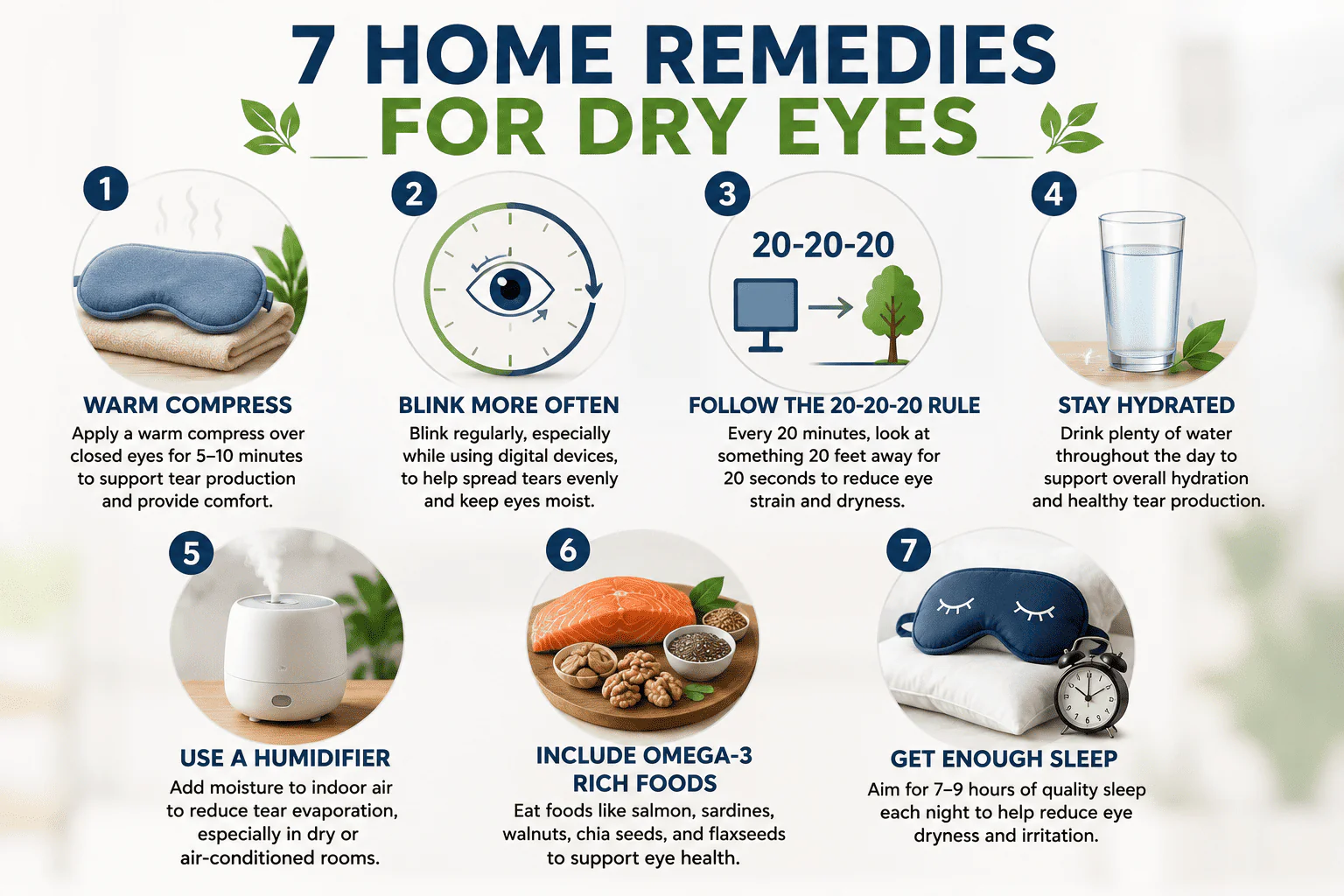
Home Remedies for Dry Eyes
- Warm Compress
Applying a warm compress over closed eyes for 5–10 minutes may help support healthy tear production and provide temporary comfort.
- Blink More Often
People tend to blink less while using digital devices. Make a conscious effort to blink regularly to help spread tears evenly across the eyes.
- Follow the 20-20-20 Rule
Every 20 minutes, look at something 20 feet away for at least 20 seconds. This simple habit can help reduce eye strain and dryness.
- Stay Hydrated
Drinking enough water throughout the day supports overall hydration, which is important for healthy tear production.
- Use a Humidifier
Adding moisture to indoor air may help reduce tear evaporation, especially in air-conditioned or heated rooms.
- Include Omega-3 Rich Foods
Foods such as salmon, sardines, walnuts, chia seeds, and flaxseeds contain omega-3 fatty acids that may help support eye health.
- Get Enough Sleep
Poor sleep can contribute to eye dryness and irritation. Aim for 7–9 hours of quality sleep each night.
Foods That Support Eye Hydration
Certain foods may help support healthy eyes and tear production:
- Salmon
- Tuna
- Walnuts
- Flaxseeds
- Chia seeds
- Oranges
- Cucumbers
- Leafy green vegetables
Habits to Avoid
To reduce dry eye symptoms, try to avoid:
- Excessive screen use without breaks
- Smoking
- Rubbing the eyes frequently
- Direct airflow from fans or air conditioners
- Spending long periods in very dry environments
When to See a Doctor
While mild dry eyes often improve with home care, consult an eye specialist if you experience:
- Persistent pain
- Severe redness
- Vision changes
- Eye discharge
- Symptoms that do not improve
Final Thoughts
Dry eyes can be uncomfortable, but simple home remedies and healthy lifestyle habits may help support eye comfort naturally. Staying hydrated, following good screen habits, eating nutrient-rich foods, and getting enough rest can contribute to healthier and more comfortable eyes.
Using a warm compress, staying hydrated, and taking regular breaks from screens may help provide temporary relief.
Proper hydration supports overall eye health and may help maintain healthy tear production.
Omega-3-rich foods such as salmon, walnuts, flaxseeds, and chia seeds may support eye comfort.
Extended screen use can reduce blinking frequency, which may contribute to dry eye symptoms.
Mild cases often improve with proper eye care, hydration, and healthy lifestyle habits.