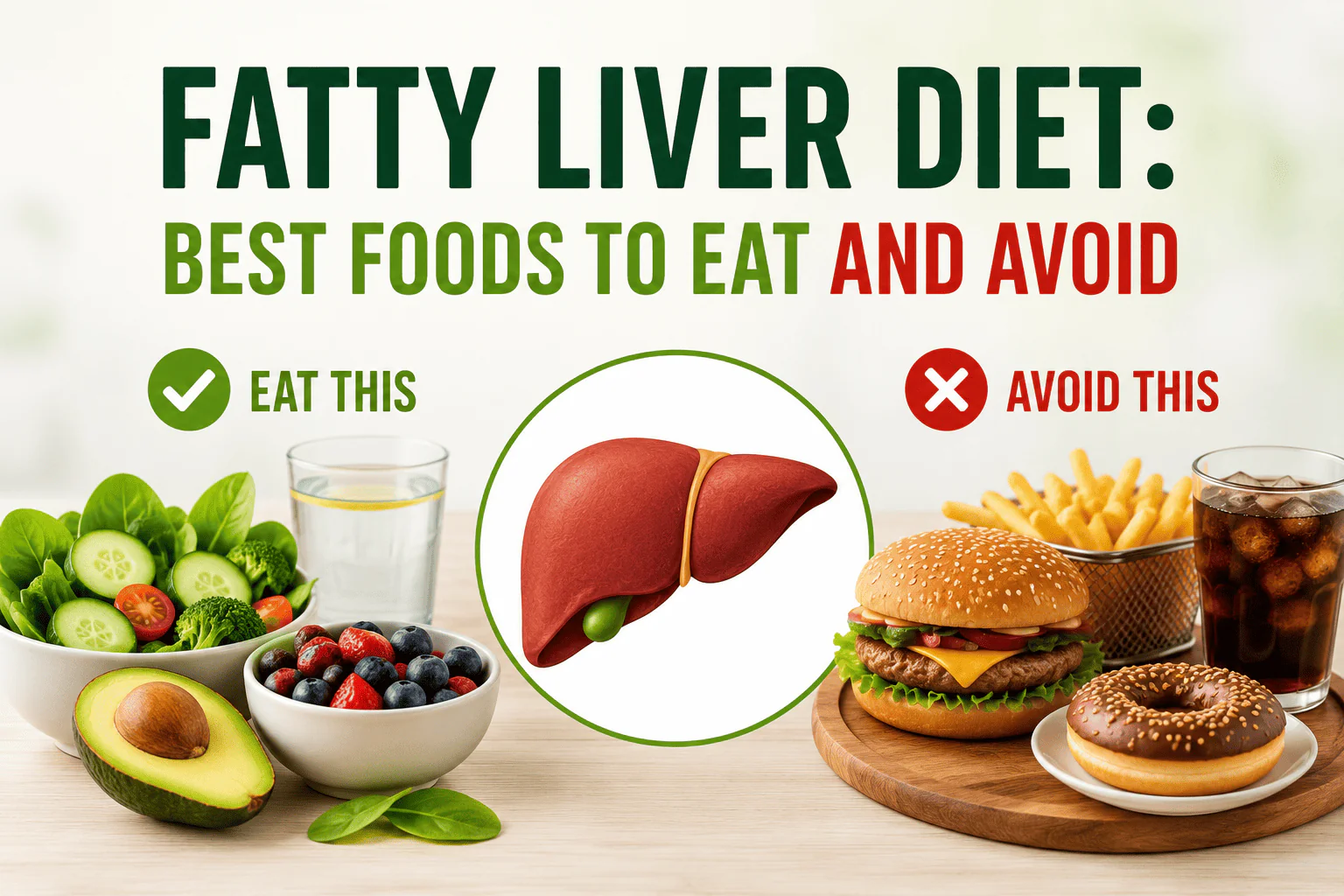
Table of Contents
ToggleBest Foods for Fatty Liver
A healthy diet plays a crucial role in managing fatty liver disease. Whether you have Non-Alcoholic Fatty Liver Disease (NAFLD) or fatty liver related to other causes, making smart food choices can help reduce liver fat, improve liver function, and support overall health. While there is no single food that cures fatty liver, a balanced diet combined with regular exercise and a healthy lifestyle can make a significant difference.
In this guide, you’ll learn the best foods to eat, which foods to avoid, and simple dietary tips to naturally support a healthy liver.
What Is Fatty Liver Disease?
Fatty liver disease occurs when excess fat builds up in the liver. In its early stages, it often causes no symptoms, but if left untreated, it can lead to liver inflammation, scarring (fibrosis), cirrhosis, and other serious complications.
Common Risk Factors
- Overweight or obesity
- Type 2 diabetes
- High cholesterol
- High triglycerides
- Insulin resistance
- Poor diet
- Lack of physical activity
- Excessive alcohol consumption
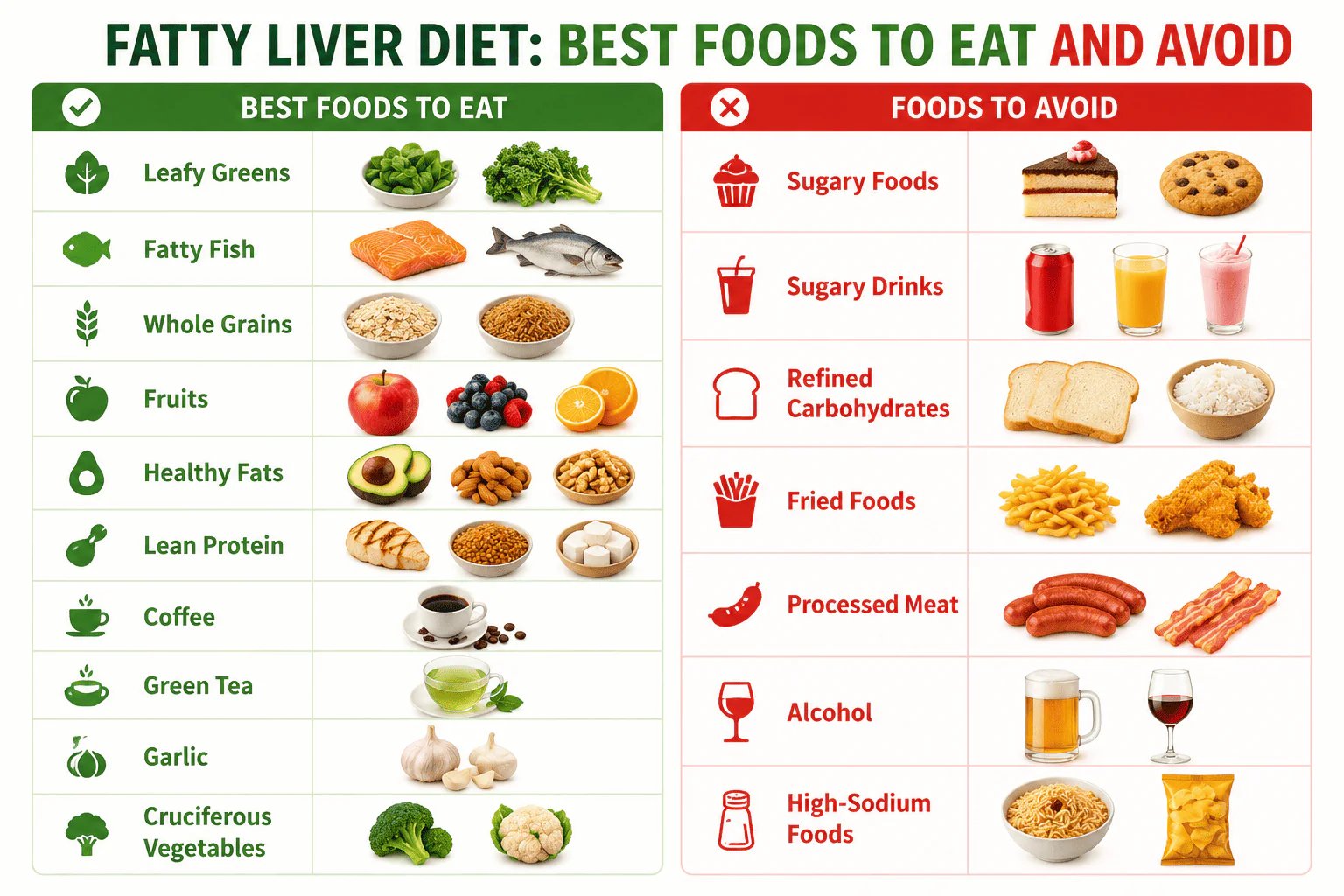
Best Foods to Eat for Fatty Liver
1. Leafy Green Vegetables
Leafy greens are rich in antioxidants, vitamins, minerals, and fiber that support liver health.
Choose:
- Spinach
- Kale
- Fenugreek leaves
- Lettuce
- Mustard greens
2. Fatty Fish
Fish rich in omega-3 fatty acids may help reduce liver fat and inflammation.
Good options include:
- Salmon
- Sardines
- Mackerel
- Trout
Aim for two servings per week.
3. Whole Grains
Whole grains provide fiber, which helps regulate blood sugar and supports weight management.
Healthy choices include:
- Brown rice
- Oats
- Quinoa
- Whole wheat bread
- Barley
4. Fruits
Fresh fruits provide antioxidants and natural fiber.
Best fruits include:
- Apples
- Berries
- Oranges
- Grapefruit
- Papaya
- Pears
Eat whole fruits instead of fruit juices whenever possible.
5. Healthy Fats
Healthy fats support heart and liver health when consumed in moderation.
Include:
- Olive oil
- Avocados
- Almonds
- Walnuts
- Chia seeds
- Flaxseeds
6. Lean Protein
Protein helps maintain muscle mass and supports overall metabolism.
Good sources are:
- Skinless chicken
- Fish
- Eggs
- Lentils
- Beans
- Tofu
- Low-fat dairy products
7. Coffee
Research suggests that moderate coffee consumption may help protect the liver and reduce the risk of liver fibrosis in some individuals.
Drink plain coffee without excessive sugar or cream.
8. Green Tea
Green tea contains antioxidants called catechins that may support liver health when consumed in moderation.
9. Garlic
Garlic contains natural compounds that may help reduce liver fat and support metabolism.
Add fresh garlic to soups, vegetables, and healthy meals.
10. Cruciferous Vegetables
These vegetables contain compounds that support the body’s natural detoxification process.
Examples include:
- Broccoli
- Cauliflower
- Brussels sprouts
- Cabbage
Foods to Avoid with Fatty Liver
Sugary Foods
Too much sugar can increase fat accumulation in the liver.
Avoid or limit:
- Candy
- Cakes
- Cookies
- Ice cream
- Sweet desserts
Sugary Drinks
Sugary beverages are one of the biggest contributors to fatty liver.
Limit:
- Soft drinks
- Energy drinks
- Sweetened fruit juices
- Sweet tea
Choose water or unsweetened beverages instead.
Refined Carbohydrates
Highly processed carbohydrates may contribute to insulin resistance.
Reduce:
- White bread
- White rice
- Pastries
- Pasta made with refined flour
Fried Foods
Fried foods are high in unhealthy fats and calories.
Avoid:
- French fries
- Fried chicken
- Chips
- Fast food
Processed Meat
Processed meats often contain unhealthy fats and excess sodium.
Examples include:
- Sausages
- Bacon
- Salami
- Hot dogs
Alcohol
Alcohol places additional stress on the liver and should be avoided or consumed only if approved by your healthcare provider.
High-Sodium Foods
Too much salt may worsen liver and overall health.
Limit:
- Packaged snacks
- Instant noodles
- Processed meals
- Canned soups
- Pickles
Sample Fatty Liver Diet Plan
Breakfast
- Oatmeal topped with berries
- Boiled egg
- Black coffee or green tea
Mid-Morning Snack
- Apple
- Handful of almonds
Lunch
- Brown rice
- Grilled chicken or tofu
- Steamed vegetables
- Mixed salad
Evening Snack
- Low-fat yogurt
- Walnuts
Dinner
- Vegetable soup
- Whole wheat chapati
- Grilled fish
- Steamed broccoli
Lifestyle Tips for Fatty Liver
- Maintain a healthy body weight.
- Exercise for at least 150 minutes per week.
- Drink plenty of water.
- Avoid smoking.
- Sleep 7–9 hours each night.
- Reduce stress through meditation or yoga.
- Follow your doctor’s treatment plan if prescribed.
Can Fatty Liver Be Reversed?
In many cases, early-stage Non-Alcoholic Fatty Liver Disease (NAFLD) can improve or even reverse with consistent lifestyle changes. Losing 7–10% of body weight, following a healthy diet, staying physically active, and controlling blood sugar and cholesterol levels can significantly reduce liver fat and inflammation.
Final Thoughts
A healthy diet is one of the most effective ways to manage fatty liver and improve long-term liver health. Focus on eating plenty of vegetables, fruits, whole grains, lean proteins, healthy fats, and fiber-rich foods while limiting sugar, processed foods, fried foods, refined carbohydrates, and alcohol. Combined with regular exercise and a healthy lifestyle, these dietary changes can help reduce liver fat, support liver function, and lower the risk of future liver complications. If you have been diagnosed with fatty liver disease, consult your healthcare provider or a registered dietitian for a personalized nutrition plan.
Frequently Asked Questions (FAQs)
A healthy breakfast may include oatmeal, berries, eggs, whole-grain toast, and unsweetened coffee or green tea.
Yes. Bananas provide fiber and nutrients and can be included as part of a balanced diet. However, they should be eaten in moderation.
Brown rice is generally a better option than white rice because it contains more fiber and nutrients.
Yes. Eggs are a good source of high-quality protein and can be included in moderation as part of a healthy diet.
Berries, apples, grapefruit, oranges, and papaya are excellent choices due to their fiber and antioxidant content.