Table of Contents
ToggleHow to Increase Hemoglobin Naturally
Hemoglobin is a protein found in red blood cells that carries oxygen from your lungs to every part of your body. Low hemoglobin levels can lead to anemia, causing symptoms such as fatigue, weakness, dizziness, pale skin, and shortness of breath. While medical treatment may be necessary in some cases, eating a nutrient-rich diet can help support healthy hemoglobin levels.
If you’re wondering how to increase hemoglobin naturally with foods, this guide covers the best iron-rich foods, nutrients that improve iron absorption, and healthy lifestyle tips to support red blood cell production.
Disclaimer: This article is for educational purposes only. If you have anemia or persistently low hemoglobin levels, consult your healthcare provider for proper diagnosis and treatment.
What Is Hemoglobin?
Hemoglobin is an iron-rich protein in red blood cells that transports oxygen throughout the body and carries carbon dioxide back to the lungs.
Healthy hemoglobin levels are important for:
- Oxygen delivery
- Energy production
- Physical performance
- Brain function
- Overall health
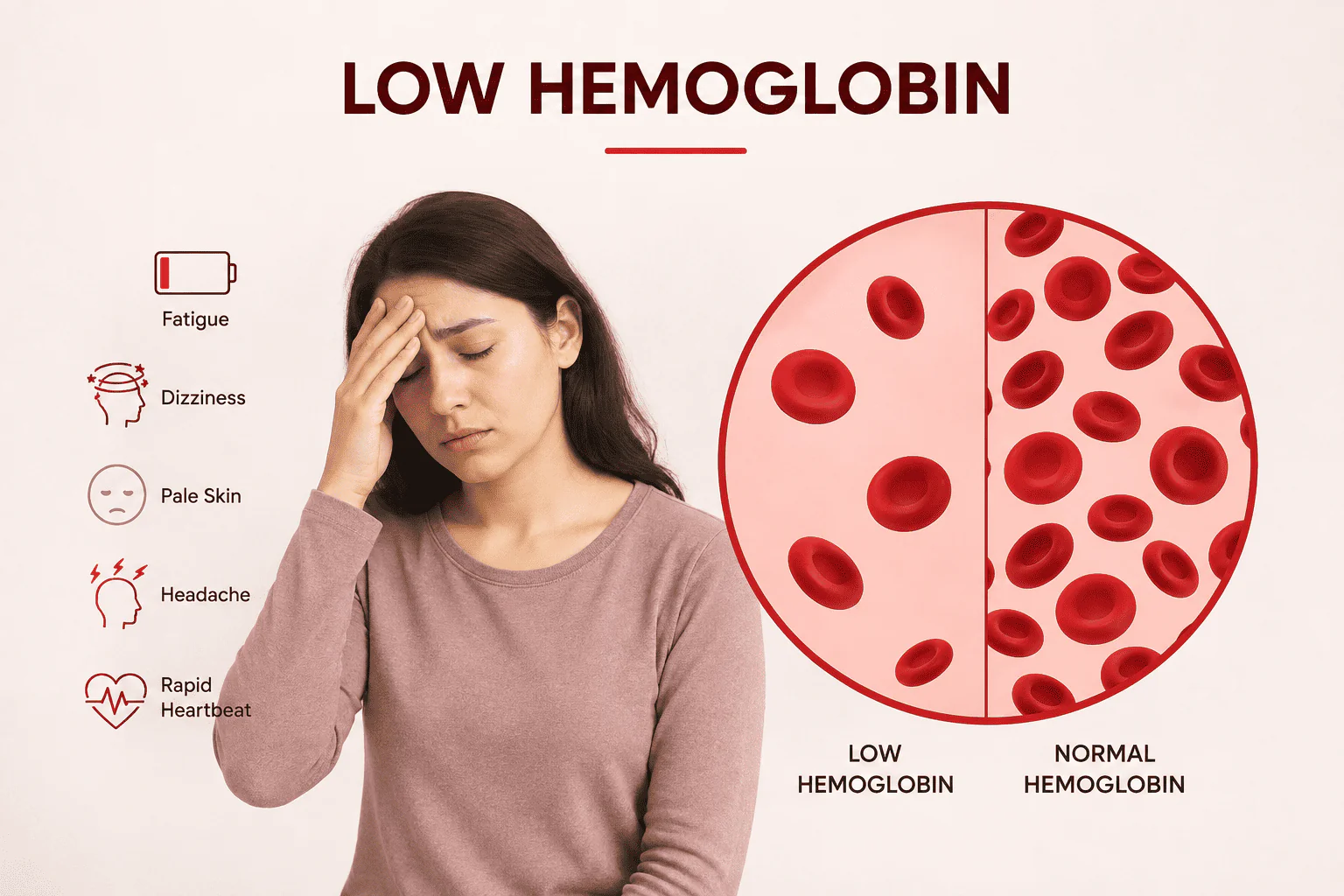
Symptoms of Low Hemoglobin
Common signs include:
- Fatigue
- Weakness
- Pale skin
- Dizziness
- Headaches
- Shortness of breath
- Cold hands and feet
- Rapid heartbeat
- Difficulty concentrating
If these symptoms persist, seek medical advice.
Common Causes of Low Hemoglobin
Low hemoglobin may occur due to:
- Iron deficiency
- Vitamin B12 deficiency
- Folate deficiency
- Blood loss
- Heavy menstrual periods
- Pregnancy
- Chronic kidney disease
- Certain digestive disorders
A blood test can help determine the underlying cause.
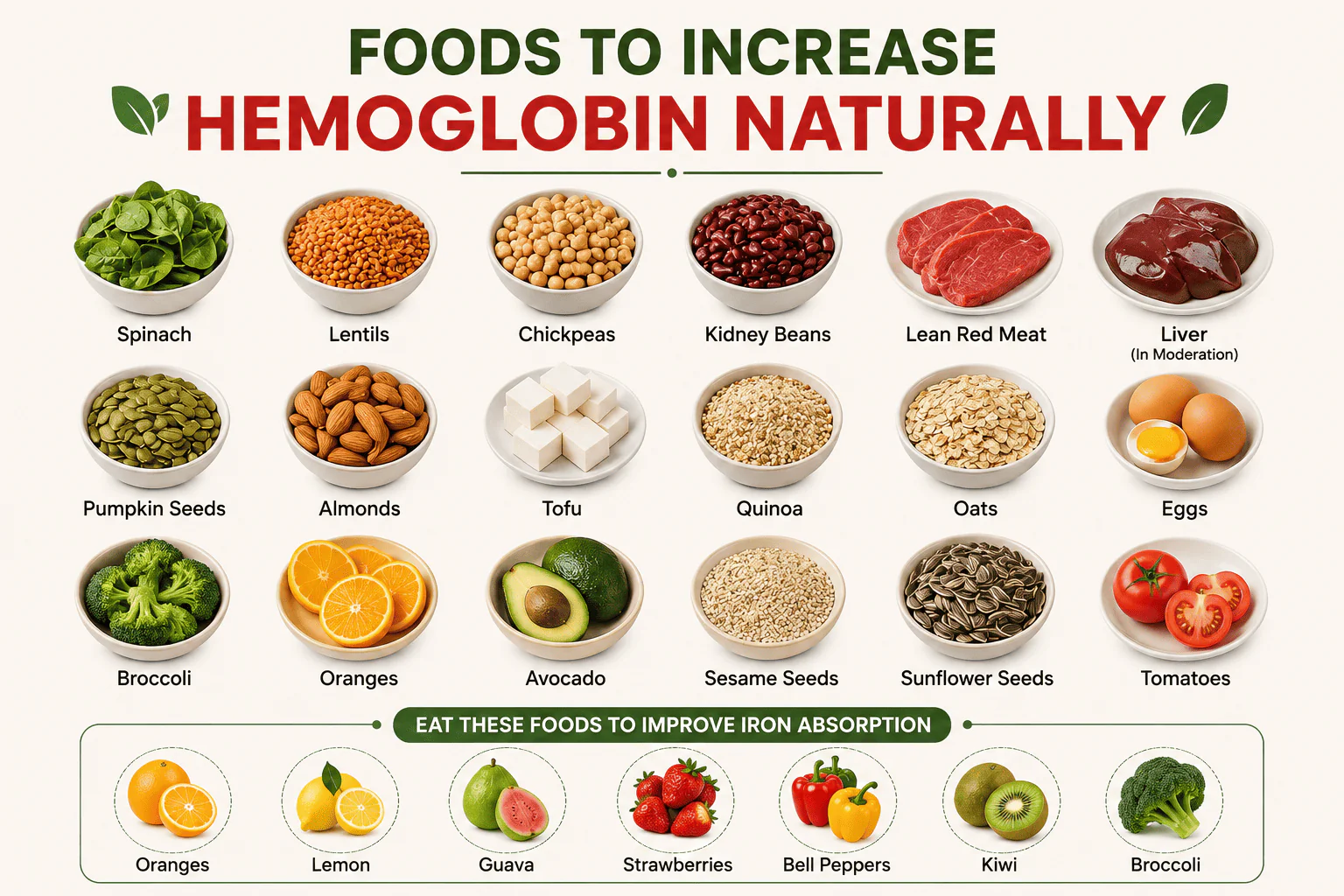
1. Eat Iron-Rich Foods
Iron is essential for hemoglobin production.
Animal Sources (Heme Iron)
These are generally absorbed more efficiently:
- Lean beef
- Chicken
- Turkey
- Fish
- Liver (consume in moderation)
Plant Sources (Non-Heme Iron)
- Spinach
- Lentils
- Chickpeas
- Kidney beans
- Tofu
- Pumpkin seeds
- Sesame seeds
- Quinoa
- Oats
2. Increase Vitamin C Intake
Vitamin C improves the absorption of non-heme iron from plant foods.
Eat iron-rich meals with:
- Oranges
- Lemons
- Guava
- Kiwi
- Strawberries
- Tomatoes
- Bell peppers
- Broccoli
Example: Add lemon juice to lentils or enjoy an orange after an iron-rich meal.
3. Include Vitamin B12-Rich Foods
Vitamin B12 supports healthy red blood cell formation.
Good sources include:
- Eggs
- Milk
- Yogurt
- Cheese
- Fish
- Chicken
- Fortified breakfast cereals
Vegetarians and vegans may need fortified foods or supplements if recommended by a healthcare provider.
4. Eat Folate-Rich Foods
Folate is another important nutrient for red blood cell production.
Include:
- Spinach
- Asparagus
- Broccoli
- Avocados
- Lentils
- Beans
- Oranges
5. Add Nuts and Seeds
Healthy options include:
- Pumpkin seeds
- Sesame seeds
- Almonds
- Cashews
- Sunflower seeds
These foods provide iron and other essential nutrients.
6. Choose Whole Grains
Whole grains contain more nutrients than refined grains.
Healthy options:
- Oats
- Brown rice
- Quinoa
- Whole wheat
- Millets
Foods That Help Improve Iron Absorption
Pair iron-rich foods with:
- Citrus fruits
- Tomatoes
- Bell peppers
- Berries
- Broccoli
This combination helps your body absorb more iron naturally.
Foods to Limit Around Iron-Rich Meals
Some foods and drinks may reduce iron absorption if consumed at the same time.
Try not to consume these immediately with iron-rich meals:
- Tea
- Coffee
- Large amounts of calcium supplements
- High-calcium dairy products (if taking iron supplements)
Spacing them by a couple of hours may help.
Healthy Lifestyle Tips
Eat Balanced Meals
Include:
- Iron-rich foods
- Vitamin C-rich fruits
- Lean protein
- Whole grains
- Vegetables
Stay Hydrated
Adequate hydration supports overall health and circulation.
Exercise Regularly
Moderate physical activity supports overall health, but avoid intense exercise if you have severe anemia unless advised by your healthcare provider.
Follow Medical Advice
If prescribed iron supplements, take them exactly as directed and attend follow-up blood tests.
Sample Iron-Rich Meal Plan
Breakfast
- Oatmeal with pumpkin seeds
- Orange slices
Lunch
- Lentil curry
- Brown rice
- Spinach salad with lemon dressing
Snack
- Apple with almonds
Dinner
- Grilled chicken or tofu
- Steamed broccoli
- Quinoa
When to See a Doctor
Seek medical advice if you:
- Experience severe fatigue or dizziness.
- Have persistent low hemoglobin levels.
- Notice blood in your stool or heavy menstrual bleeding.
- Are pregnant and suspect anemia.
- Have chest pain, shortness of breath, or fainting.
Conclusion
Learning how to increase hemoglobin naturally with foods begins with eating a balanced diet rich in iron, vitamin C, vitamin B12, and folate. Foods like spinach, lentils, lean meats, pumpkin seeds, citrus fruits, and whole grains can support healthy red blood cell production. Combined with regular medical checkups and healthy lifestyle habits, these dietary choices can help maintain optimal hemoglobin levels and improve overall well-being.
Frequently Asked Questions (FAQs)
Iron-rich foods such as lean meat, lentils, spinach, beans, and pumpkin seeds can support hemoglobin production, especially when paired with vitamin C-rich foods.
Yes. Spinach contains iron and folate, although the iron from plant foods is absorbed better when eaten with vitamin C-rich foods.
Fruits rich in vitamin C, such as oranges, guava, kiwi, and strawberries, help improve iron absorption and support healthy hemoglobin levels.
The timeline depends on the underlying cause and treatment. Dietary changes may help over several weeks, but medical evaluation is important if hemoglobin levels are significantly low.